CCVCC Review: Practicing Initial and Final Consonant Clusters
- Reading Bulilit
- Beginning Readers
CCVCC words contain two initial consonants, a vowel, and two final consonants, such as plant, blend, crisp, front, and crust. Reviewing these words helps learners blend longer words while attending to every sound.
What Will We Learn Today?
By the end of the lesson, learners will be able to:
identify the phonemes in CCVCC words;
recognize initial and final consonant clusters;
pronounce each consonant sound in a word;
blend phonemes to read CCVCC words;
segment CCVCC words for spelling; and
read CCVCC words with different short-vowel sounds.
Fun Activities
1. Stretch and Blend
Say each phoneme separately before blending the whole word.
Example: /p/ /l/ /ă/ /n/ /t/ → plant
2. Tap the Sounds
Ask learners to tap once for each sound they hear.
Example: crisp → /k/ /r/ /ĭ/ /s/ /p/ → five taps
3. Build the Word
Use letter cards or magnetic letters to build CCVCC words. Ask learners to point to each letter, say each sound, and blend the whole word.
4. Change One Sound
Change one phoneme to make a new word.
Example: plant → slant
5. Sort by Short-Vowel Sound
Ask learners to sort CCVCC words according to their medial vowel sound: short a, e, i, o, or u.
Discussion
Review CCVCC words according to their short-vowel sounds. Model how to blend through both consonant clusters without omitting or adding sounds.
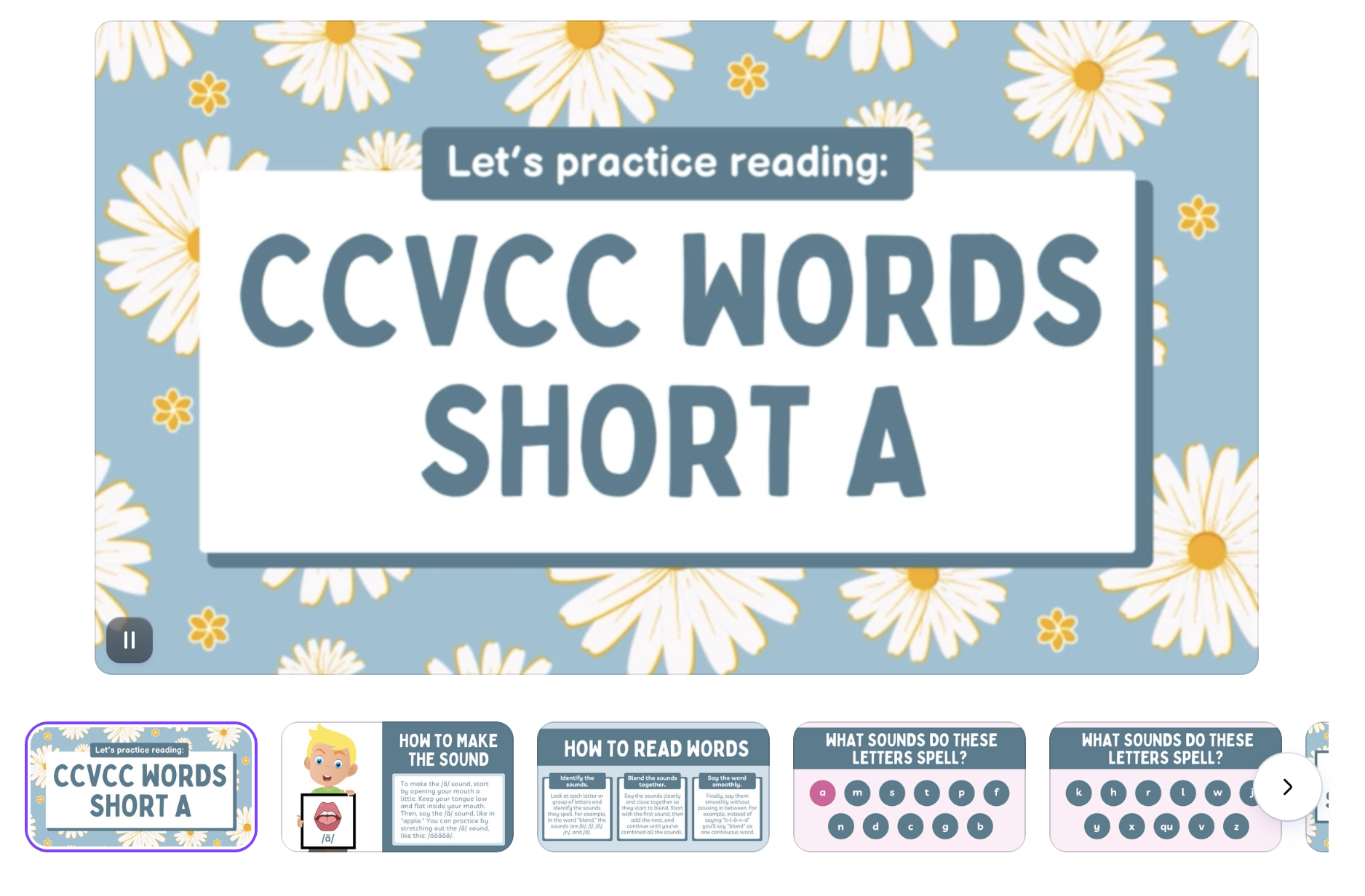
Short A CCVCC Words
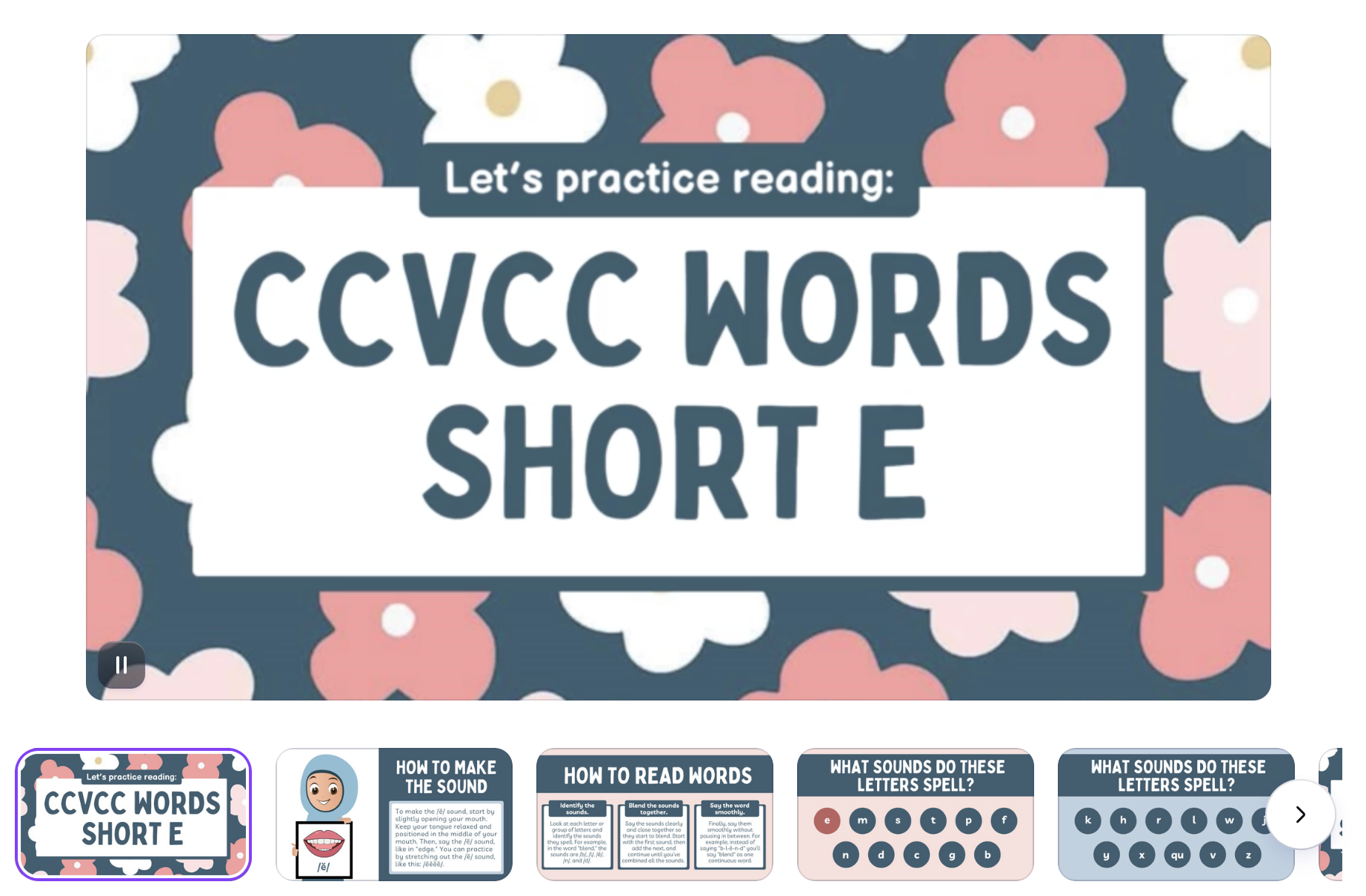
Short E CCVCC Words
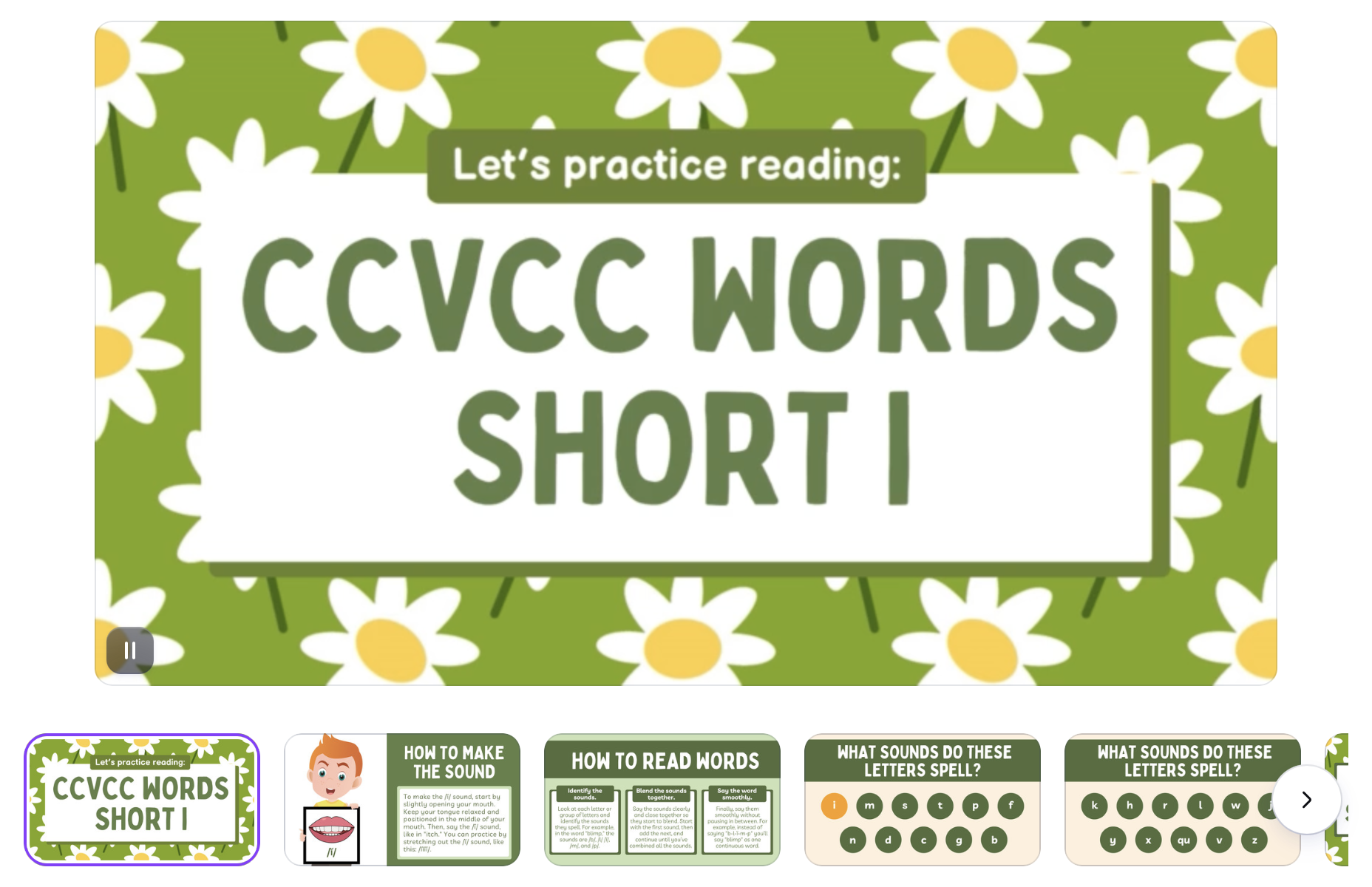
Short I CCVCC Words
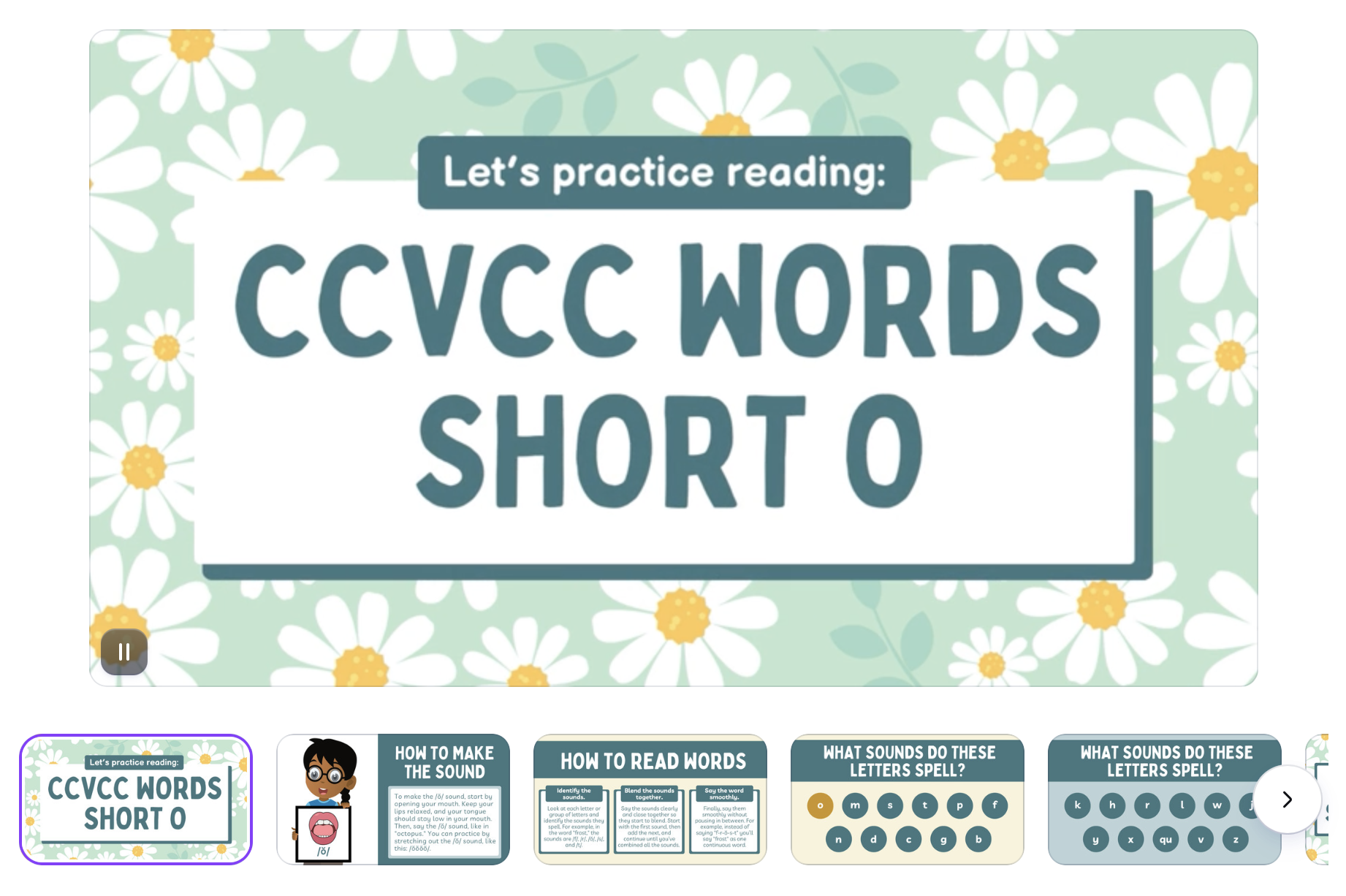
Short O CCVCC Words
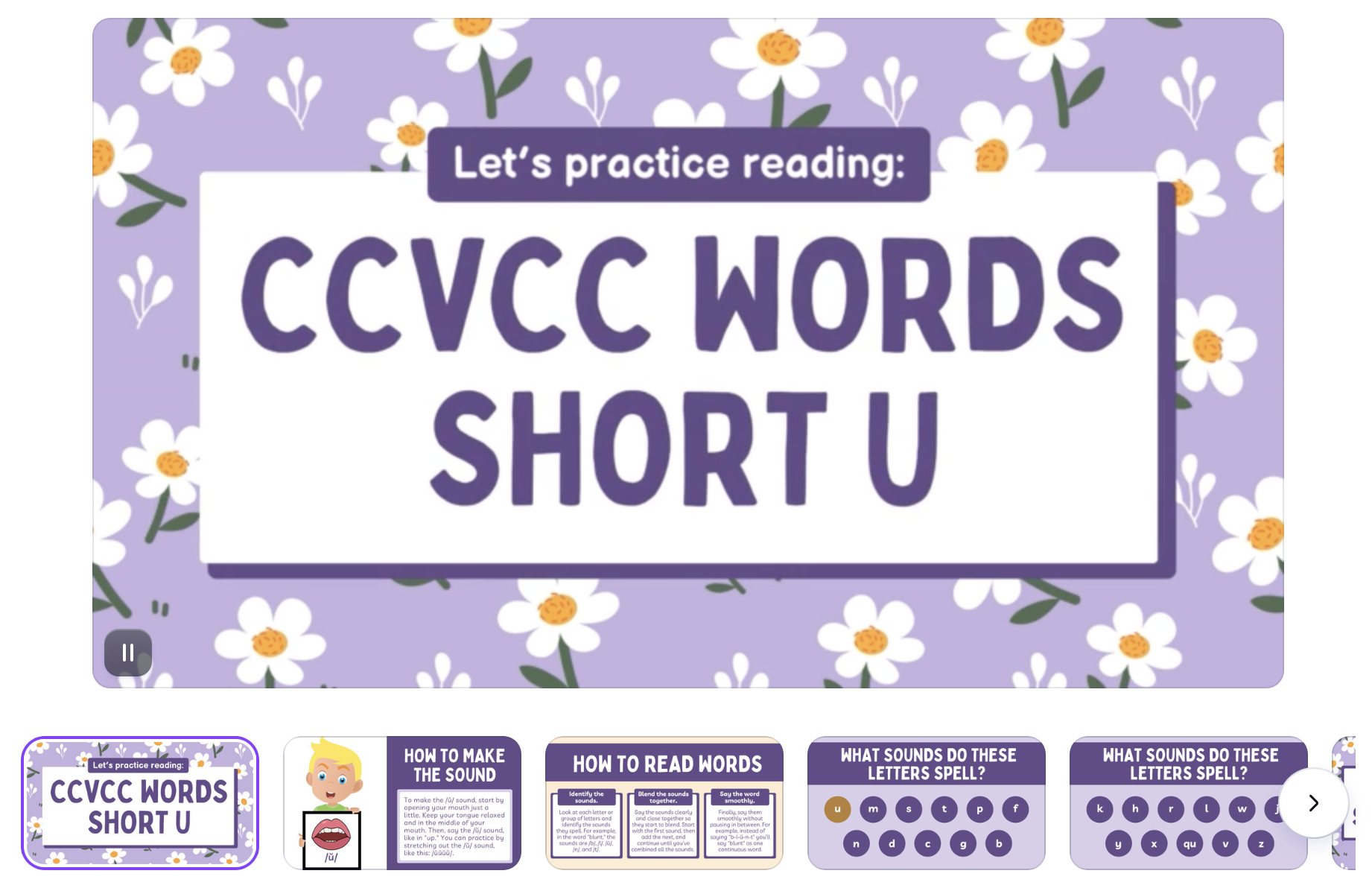
Short U CCVCC Words
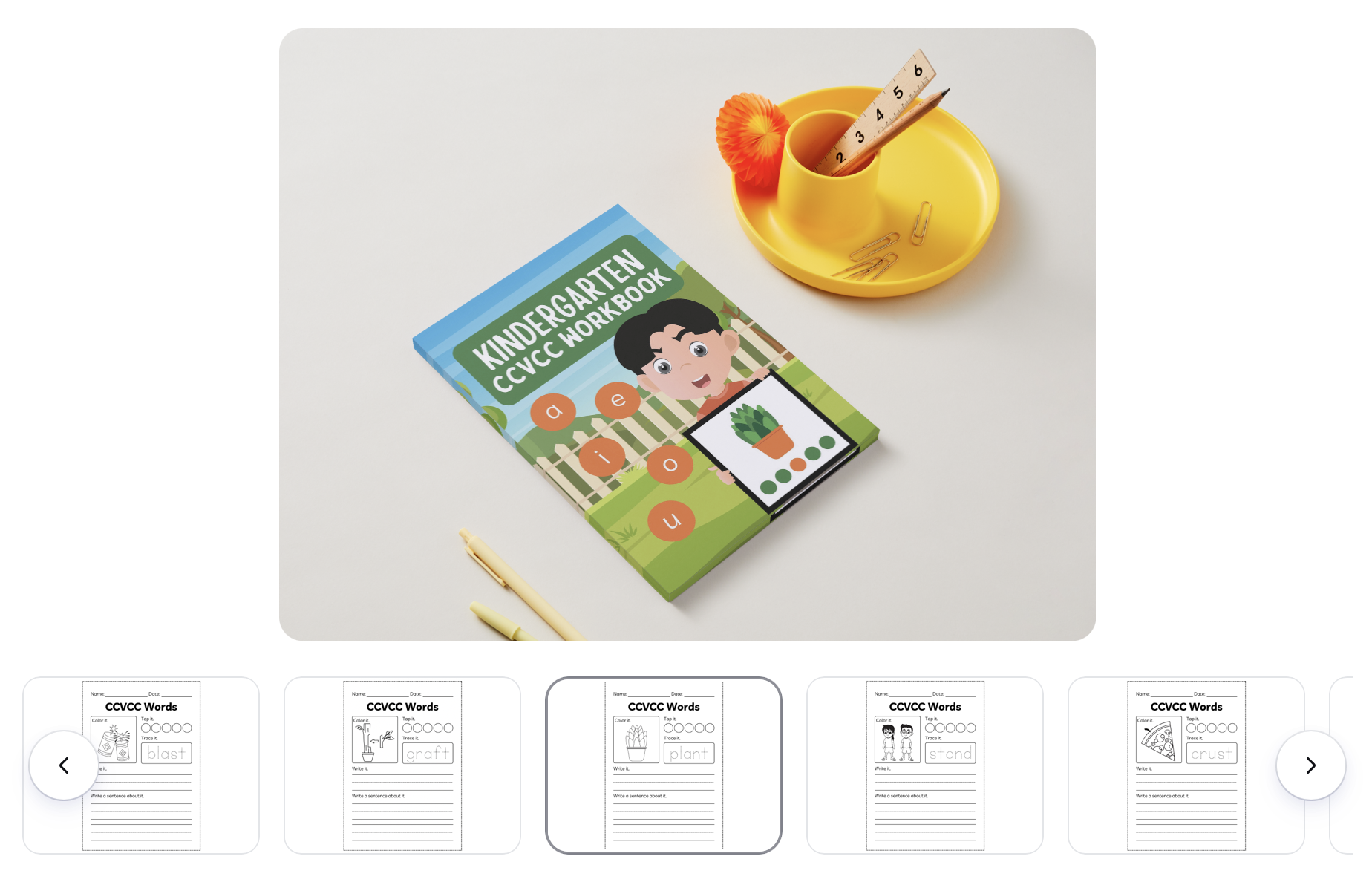
Workbook
Use the CCVCC workbook for guided practice, independent work, literacy centres, homework, or additional reading support.
https://www.canva.com/templates/EAGRtrGTw8s-ccvcc-workbook-worksheet/
Conclusion
Regular CCVCC practice helps learners read longer words with initial and final consonant clusters accurately and confidently. Remind learners to pronounce every sound and blend smoothly through the whole word. Once learners can read individual CCVCC words, introduce them in phrases, sentences, and decodable texts.