CVC Review: Building Strong Early Reading Skills
- Reading Bulilit
- Beginning Readers
CVC words are simple three-letter words with a consonant–vowel–consonant pattern, such as cat, hen, pig, log, and sun. Reviewing these words helps beginning readers strengthen their phonemic awareness, blending, decoding, and spelling skills.
What Will We Learn Today?
By the end of the lesson, learners will be able to:
identify the beginning, middle, and ending sounds in CVC words;
recognize the five short-vowel sounds;
blend individual phonemes to read CVC words;
segment CVC words into their individual sounds; and
read and spell familiar CVC words with increasing accuracy and fluency.
Fun Activities
Make your CVC review lively and interactive with these simple activities:
1. Say It and Tap It
Say a CVC word aloud. Ask learners to tap once for each sound they hear.
Example: sun → /s/ /ŭ/ /n/ → three taps
2. Build the Word
Give learners letter cards or magnetic letters. Say a CVC word and have them arrange the letters to build it. Ask them to point to each letter, say its sound, and blend the whole word.
3. Change One Sound
Begin with a familiar CVC word and change one phoneme at a time.
Example: cat → cap → map → mop
This activity helps learners notice how changing one sound creates a new word.
4. Sort by Short-Vowel Sound
Prepare several CVC word or picture cards. Ask learners to sort them according to their medial vowel sound: short a, e, i, o, or u.
5. CVC Word Hunt
Hide word cards around the classroom. Learners find a card, read the word, and identify its short-vowel sound.
Discussion
Review each short-vowel sound separately before mixing all five vowel sounds together. Model how to say each phoneme and blend the sounds continuously from left to right.
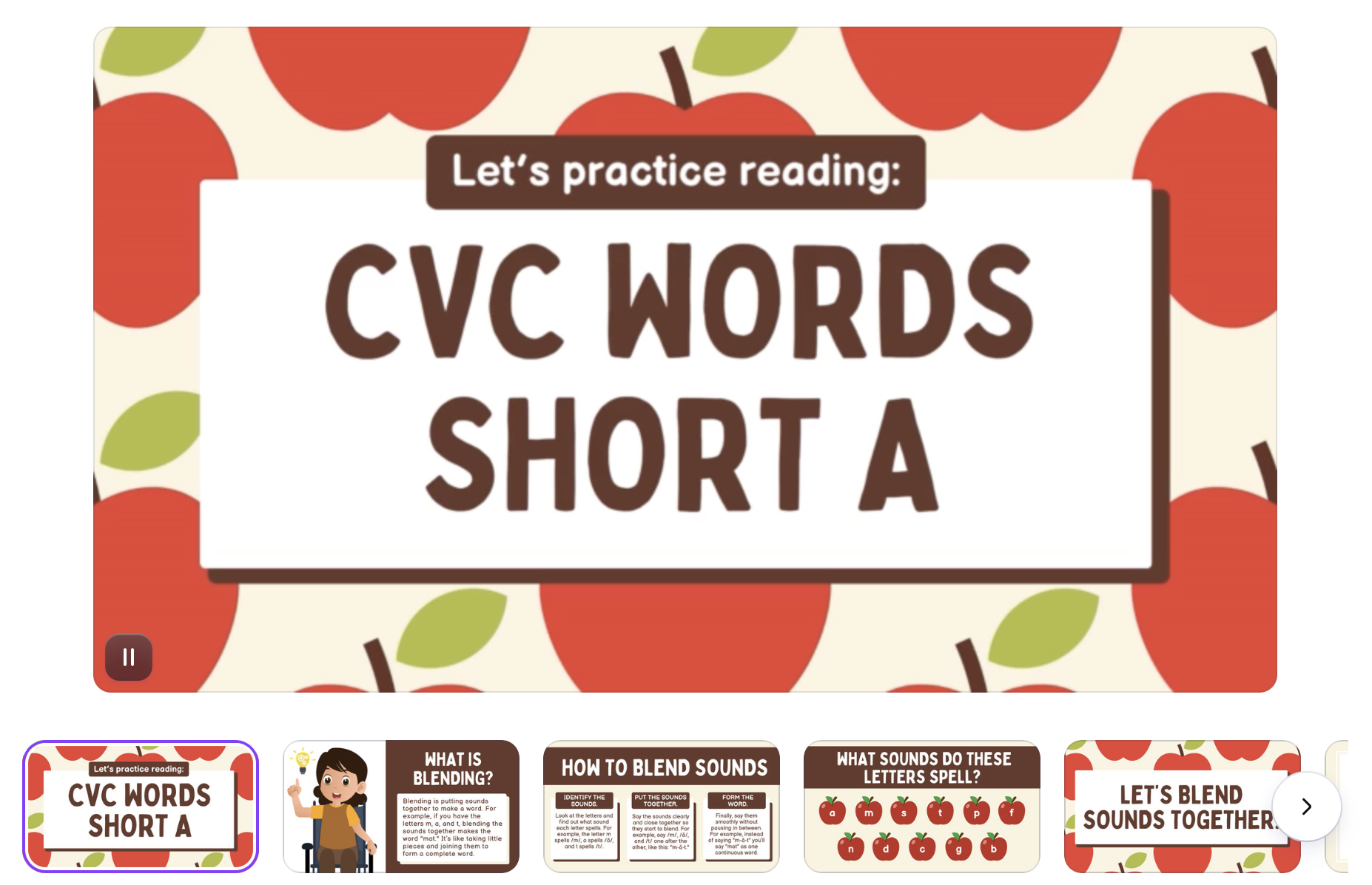
Short A
Review the short a sound, /ă/, using words such as cat, ham, map, pan, and rag.
Download the Presentation:
https://www.canva.com/templates/EAGPjliyyy4-phonics-blending-sounds-cvc-words-short-a-presentation/
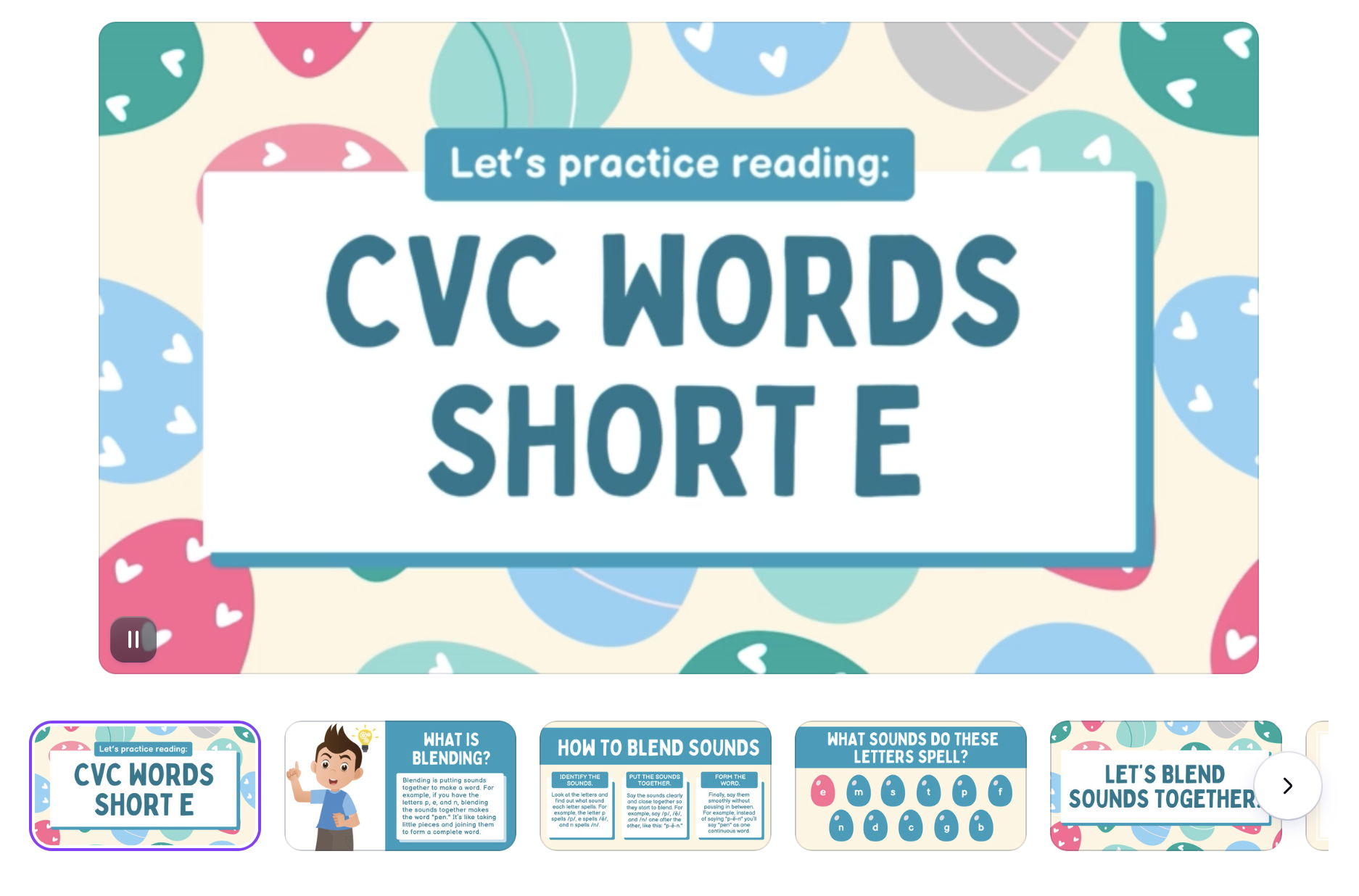
Short E
Review the short e sound, /ĕ/, using words such as bed, hen, leg, net, and red.
Download the Presentation:
https://www.canva.com/templates/EAGPj56n__E-phonics-blending-sounds-cvc-words-short-e-presentation/
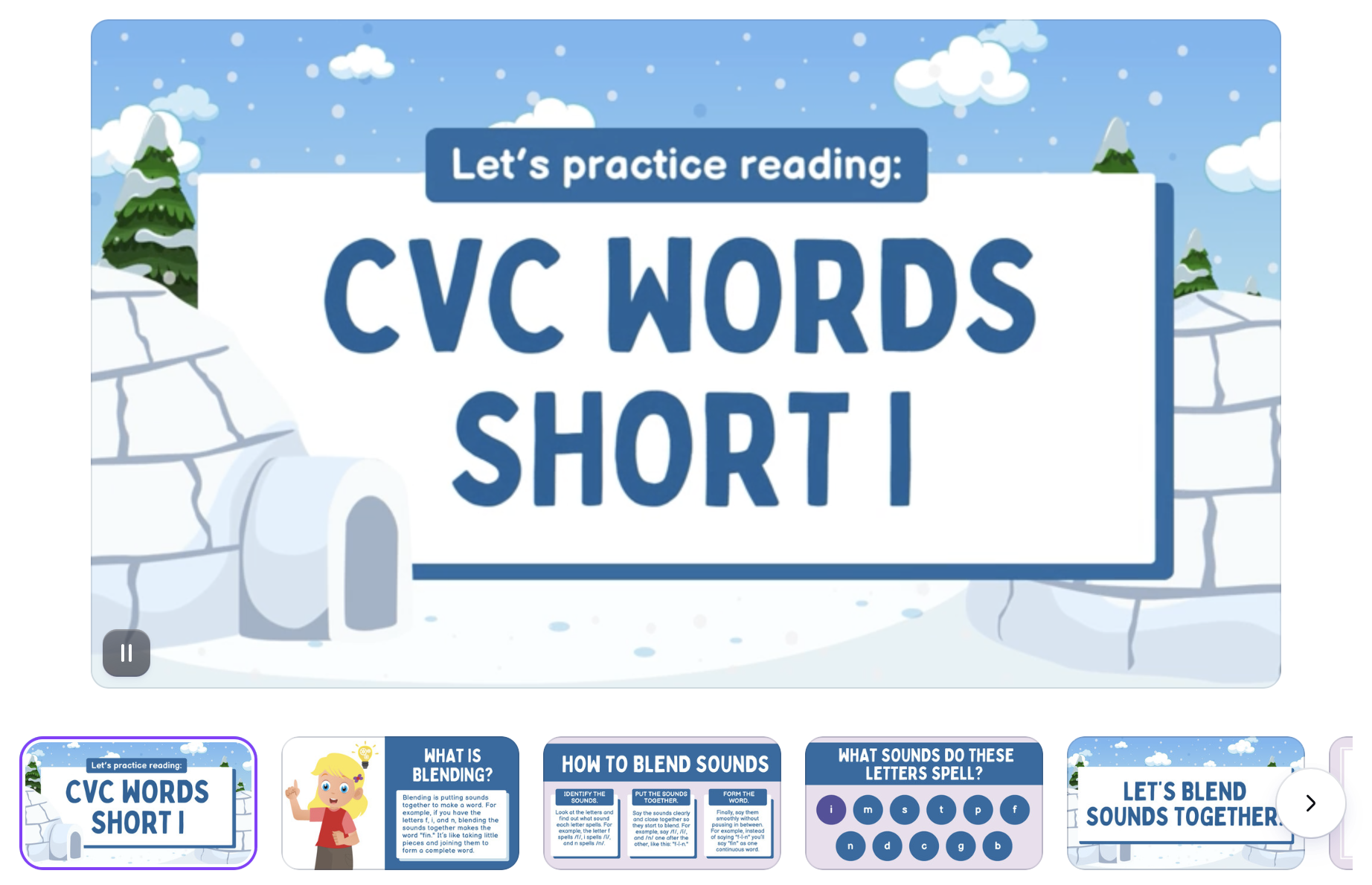
Short I
Review the short i sound, /ĭ/, using words such as fin, lip, pig, sit, and win.
Download the Presentation:
https://www.canva.com/templates/EAGPkWStuVA-phonics-blending-sounds-cvc-words-short-i-presentation/
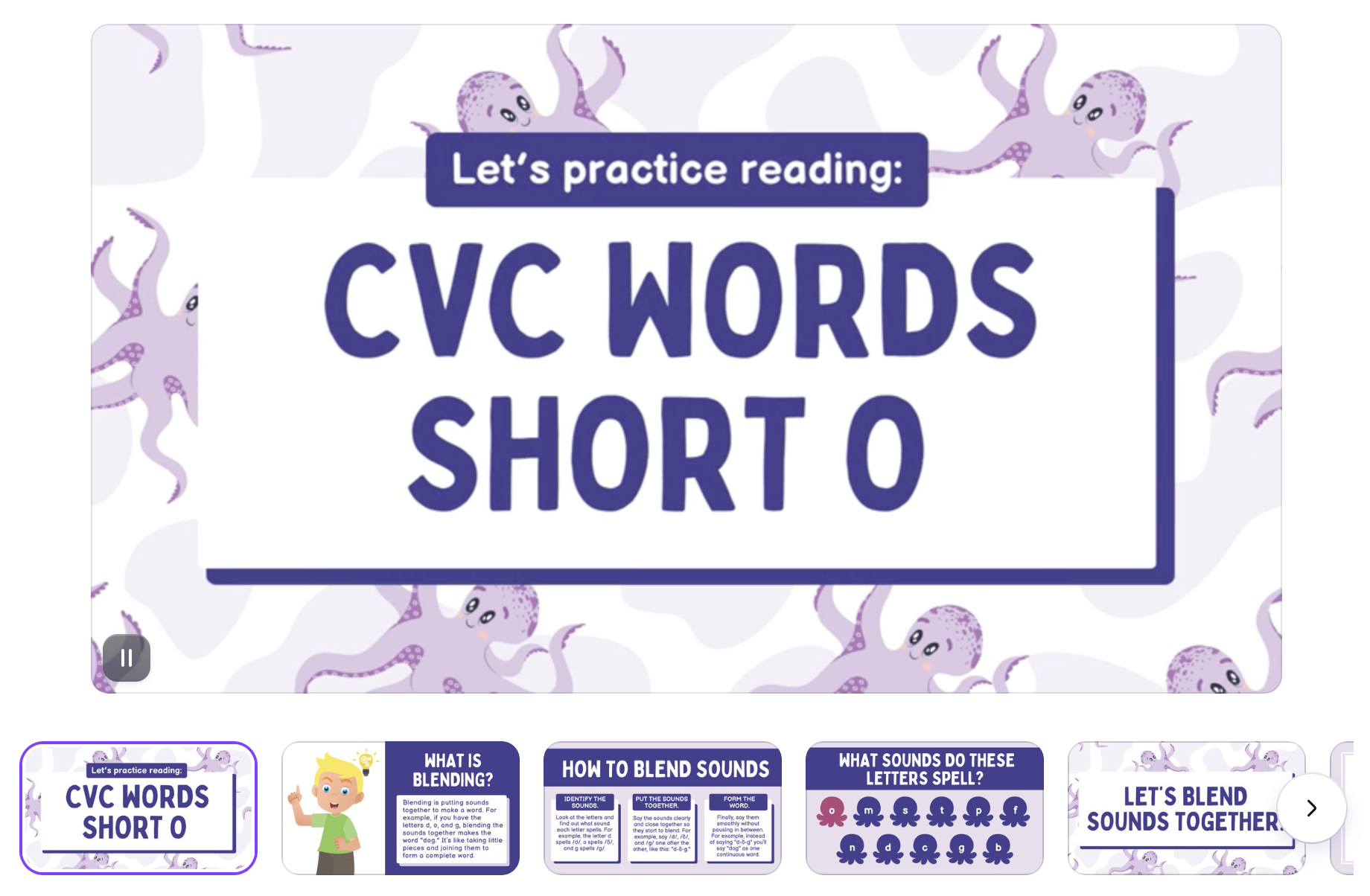
Short O
Review the short o sound, /ŏ/, using words such as dog, hot, log, mop, and pot.
Download the Presentation:
https://www.canva.com/templates/EAGPpVKV1wM-phonics-blending-sounds-cvc-words-short-o-presentation/
Short U
Review the short u sound, /ŭ/, using words such as bug, cup, fun, hut, and sun.
Download the Presentation:
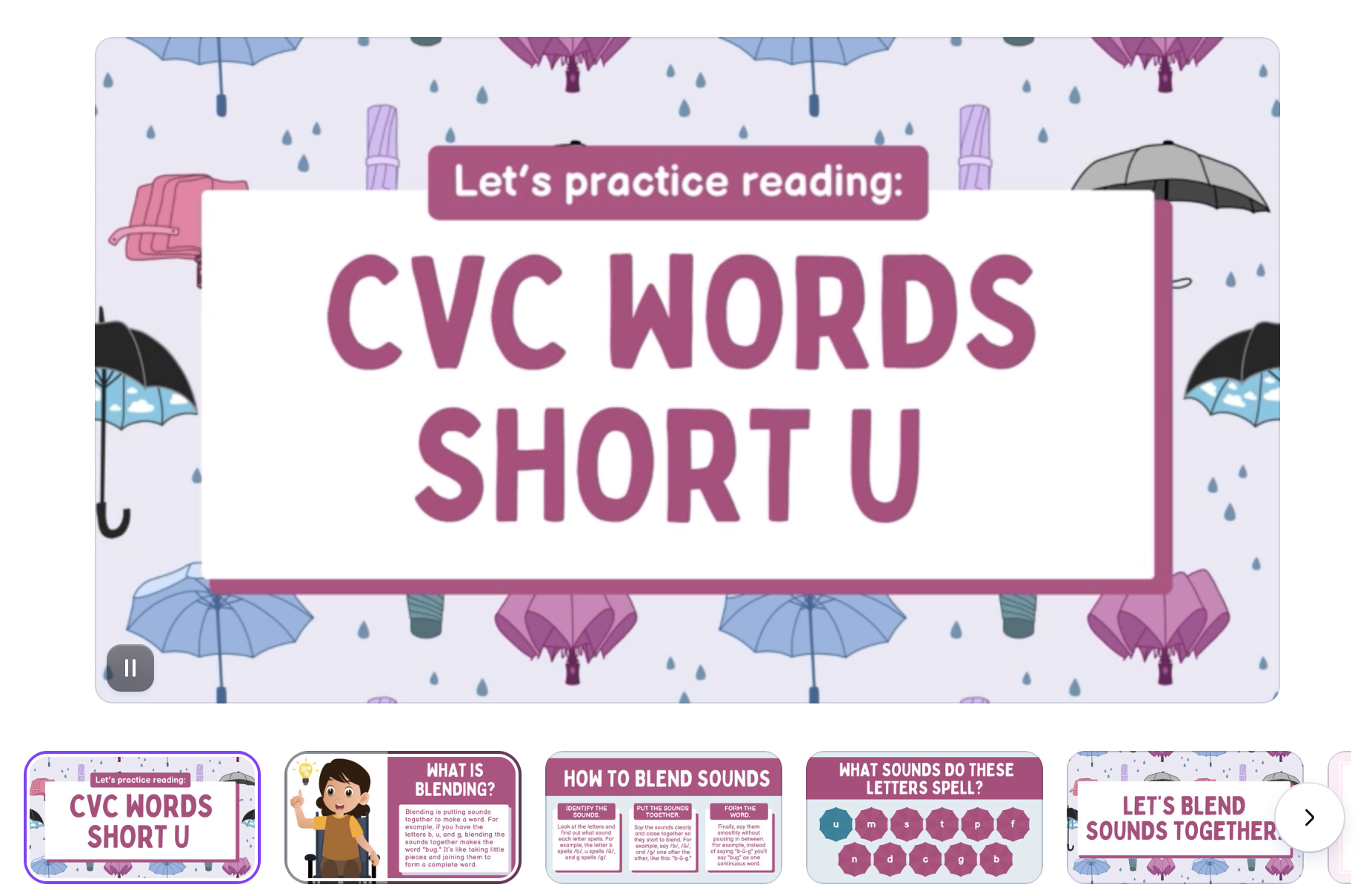
https://www.canva.com/templates/EAGPprNOm_M-phonics-blending-sounds-cvc-words-short-u-presentation/
After reviewing each vowel sound, present a mixed list of CVC words. Encourage learners to look closely at the middle letter, say its sound, and blend the word.
Workbooks
Provide learners with opportunities to practise reading, writing, matching, sorting, and completing CVC words. Workbook activities can be used during guided reading, literacy centres, independent practice, homework, or intervention sessions.
Download the Free Workbook:
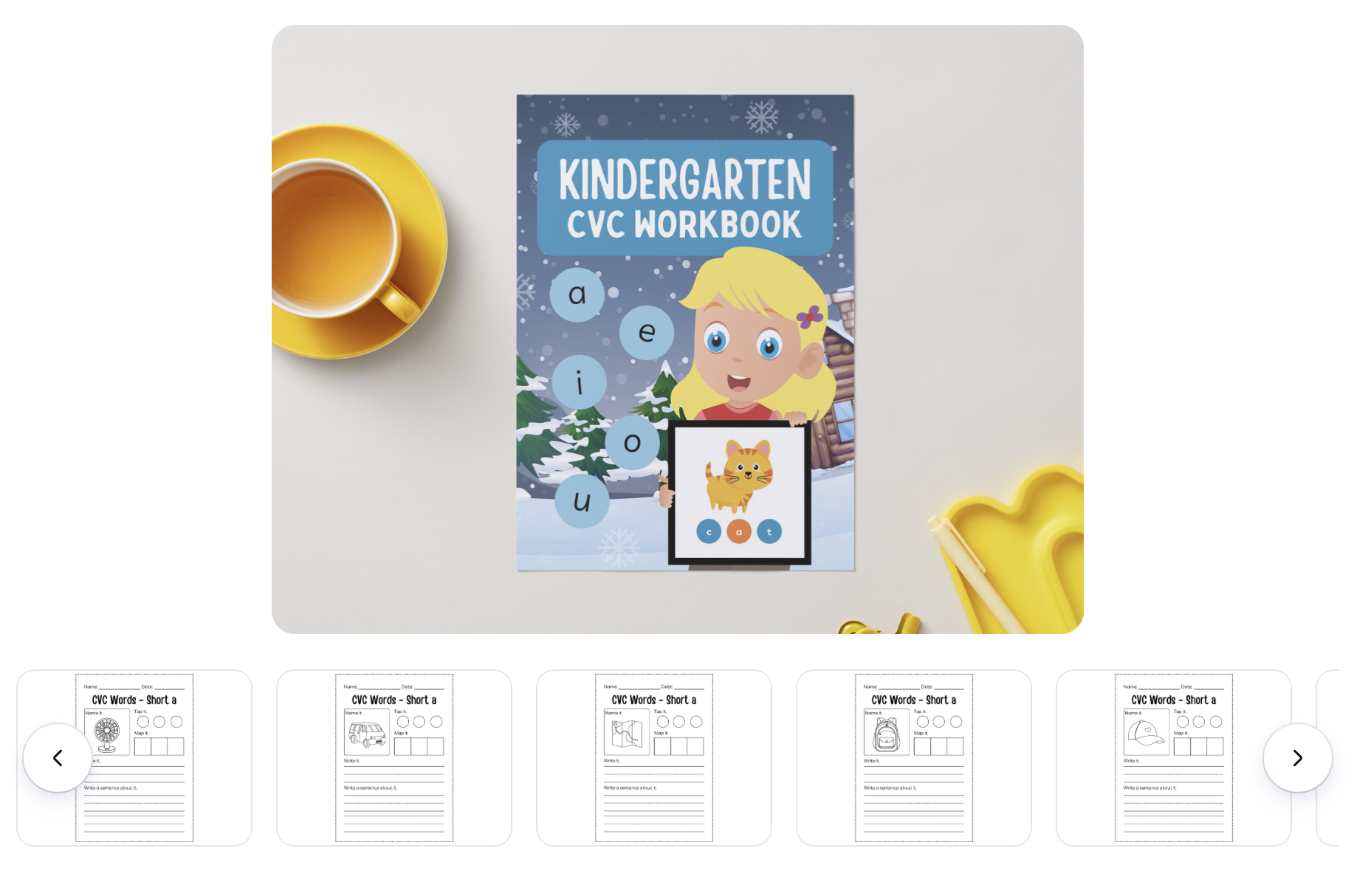
https://www.canva.com/templates/EAGNs8Vscic-cvc-workbook-worksheet/
Teachers may differentiate the activities by asking emerging readers to work with pictures and letter tiles, while more confident readers can write words independently or use them in simple sentences.
Phoneme Flashcards
Phoneme flashcards help learners connect letters with their corresponding sounds. Use the cards for quick daily reviews before beginning CVC word practice.
Flashcards:
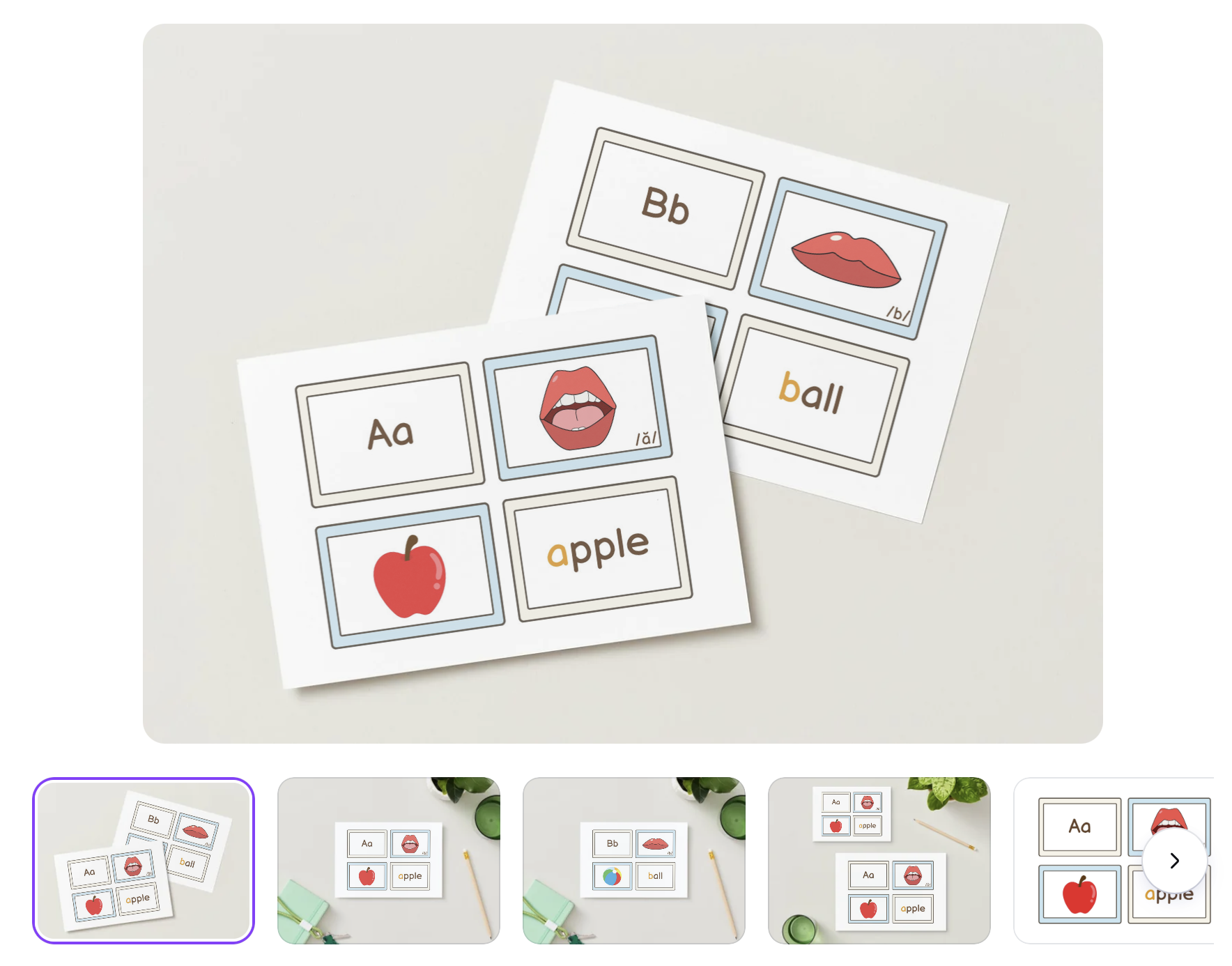
Show one card at a time and ask learners to:
say the phoneme;
identify whether it is a consonant or vowel sound;
name a word that begins with the sound;
find the sound in a CVC word; or
combine the phoneme with two other sounds to build a word.
Keep the activity quick and engaging. The goal is for learners to recall each sound automatically so they can focus their attention on blending and reading words.
Conclusion
A careful review of CVC words gives beginning readers a strong foundation for reading more complex words. Through explicit modelling, repeated practice, and playful activities, learners become more confident in recognizing short-vowel sounds, blending phonemes, and decoding words independently.
Celebrate progress, revisit sounds that need more practice, and give learners plenty of opportunities to read CVC words in both isolation and meaningful sentences.