Lesson 2: /k/ (Spelling Patterns: c, k, ck)
- Reading Bulilit
- Developing Readers
Discover the /k/ Sound in Words Like cat, kite, and duck
Learning to read becomes easier when children understand that the same sound can be spelled in different ways. In this lesson, we introduce the /k/ sound, one of the most common consonant sounds in English. Children will learn to recognize the different spelling patterns that represent the /k/ sound and apply them while reading and spelling simple words.
This lesson helps beginning readers identify, pronounce, and read the /k/ sound through explicit instruction, listening activities, and decoding practice. Following a systematic phonics sequence allows children to build strong foundational reading skills one step at a time. Whether you're a parent, teacher, tutor, or homeschool educator, this free lesson provides engaging resources to support confident, successful readers.
Before You Get Started
All of the resources in this lesson—including the interactive presentation, worksheets, classroom poster, and mini activity book—are completely free to access and edit with Canva Education.
If you're a teacher, school staff member, or eligible homeschool educator, you can apply for a free Canva Education account to unlock these resources.
👉 Sign up for Canva Education here: https://partner.canva.com/Agkrzj
Once your Canva Education account is approved, you'll be able to access, customize, and use all of the resources in this lesson at no cost.
What Your Child Will Learn
By the end of this lesson, your child will be able to:
Recognize the /k/ sound in spoken words.
Learn that c, k, and ck can all spell the /k/ sound.
Articulate the sound correctly.
Read and identify words containing the /k/ sound.
Notice different spelling patterns while reading.
Strengthen decoding and spelling skills.
Reading Skill Spotlight: The /k/ Sound
The /k/ sound is one of the most common consonant sounds in English. It is a voiceless sound, which means your vocal cords do not vibrate when you say it.
The /k/ sound can be spelled in several ways.
The letter c often spells /k/ before the vowels a, o, and u, as in:
cat
cot
cup
can
The letter k commonly spells /k/ before the vowels e, i, and y, or at the beginning of many words, as in:
kite
kid
key
koala
The spelling ck is usually found at the end of short words after a short vowel, as in:
duck
rock
sock
neck
Although these words are spelled differently, they all contain the same /k/ sound. Learning these spelling patterns helps children become more accurate readers and spellers.
Make the Sound
Let's practise together!
The /k/ sound is made by lifting the back of your tongue to the top of your mouth and releasing a small puff of air. Your voice does not turn on when making this sound.
Say it slowly:
/k/
Now try it three times:
/k/ … /k/ … /k/
Encourage children to place a hand in front of their mouth to feel the small puff of air as they say the sound. This simple activity helps them notice how the sound is produced.
Teach the Lesson with the Interactive Presentation
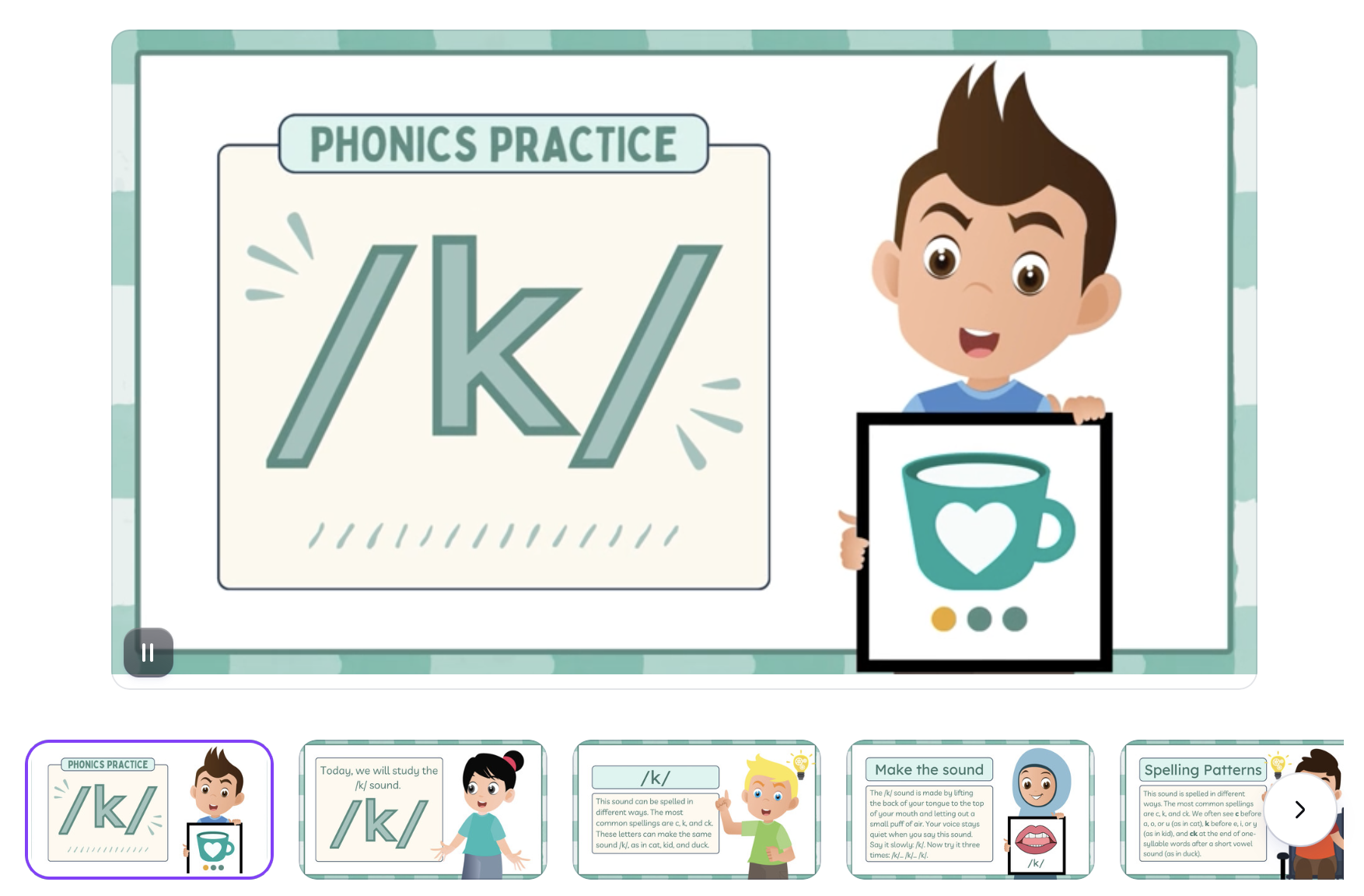
Introduce the /k/ sound using the interactive presentation. It provides explicit instruction, pronunciation practice, spelling patterns, word reading, and engaging activities in a clear, systematic sequence. The presentation is suitable for classrooms, small-group instruction, intervention sessions, tutoring, or home learning.
👉 Access the presentation here:
Download the Free Worksheets
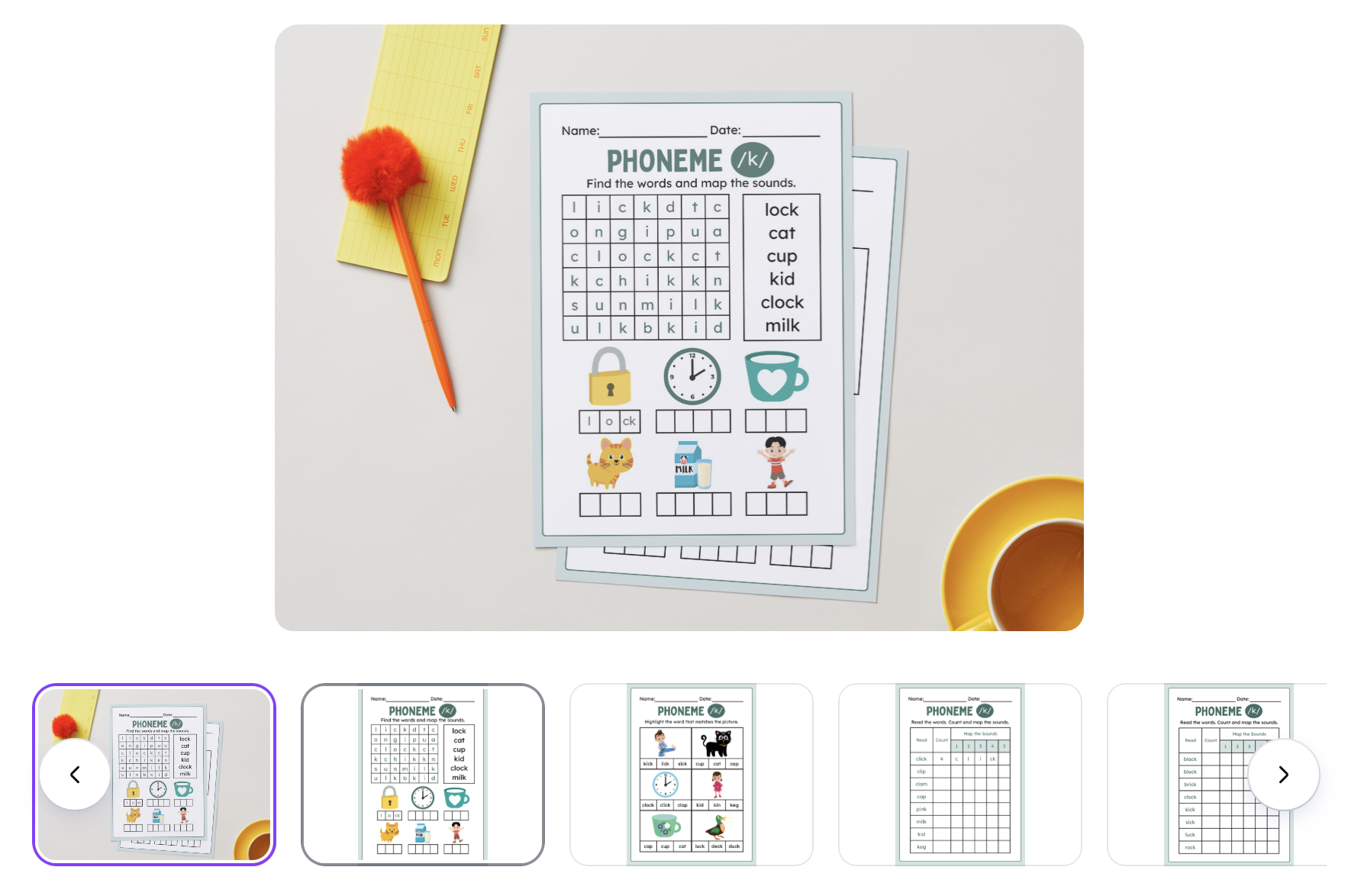
Reinforce learning with printable worksheets that provide opportunities to practise reading, writing, spelling, and applying the /k/ sound. These activities encourage repeated practice while helping children build confidence and fluency.
👉 Download the worksheets here:
Display the Classroom Poster
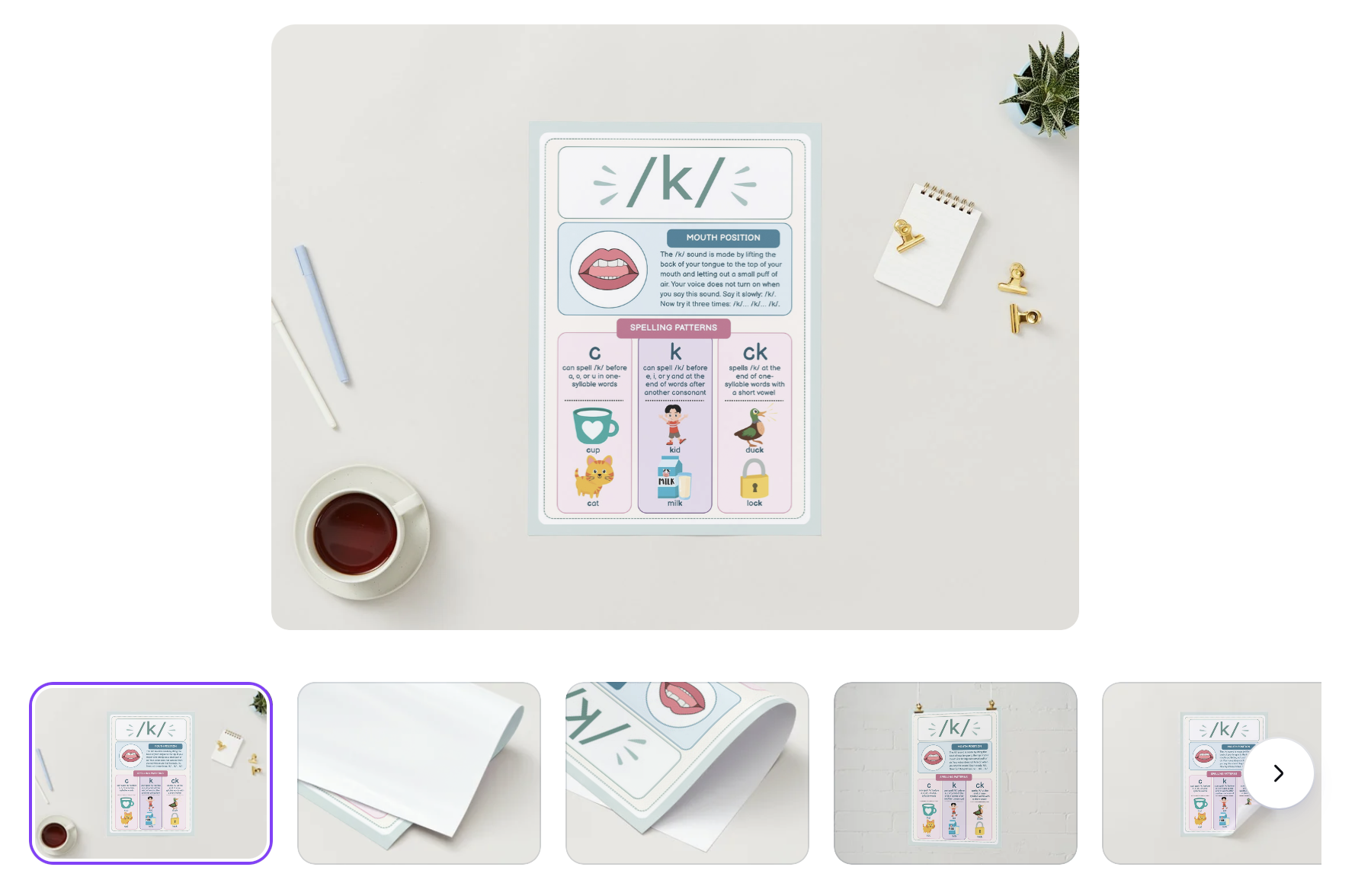
Support daily review with a printable classroom poster featuring the /k/ sound and its spelling patterns. Display it on your phonics wall, literacy centre, or reading corner to provide children with a helpful visual reference throughout the lesson.
👉 Download the poster here:
Practise with the Mini Activity Book
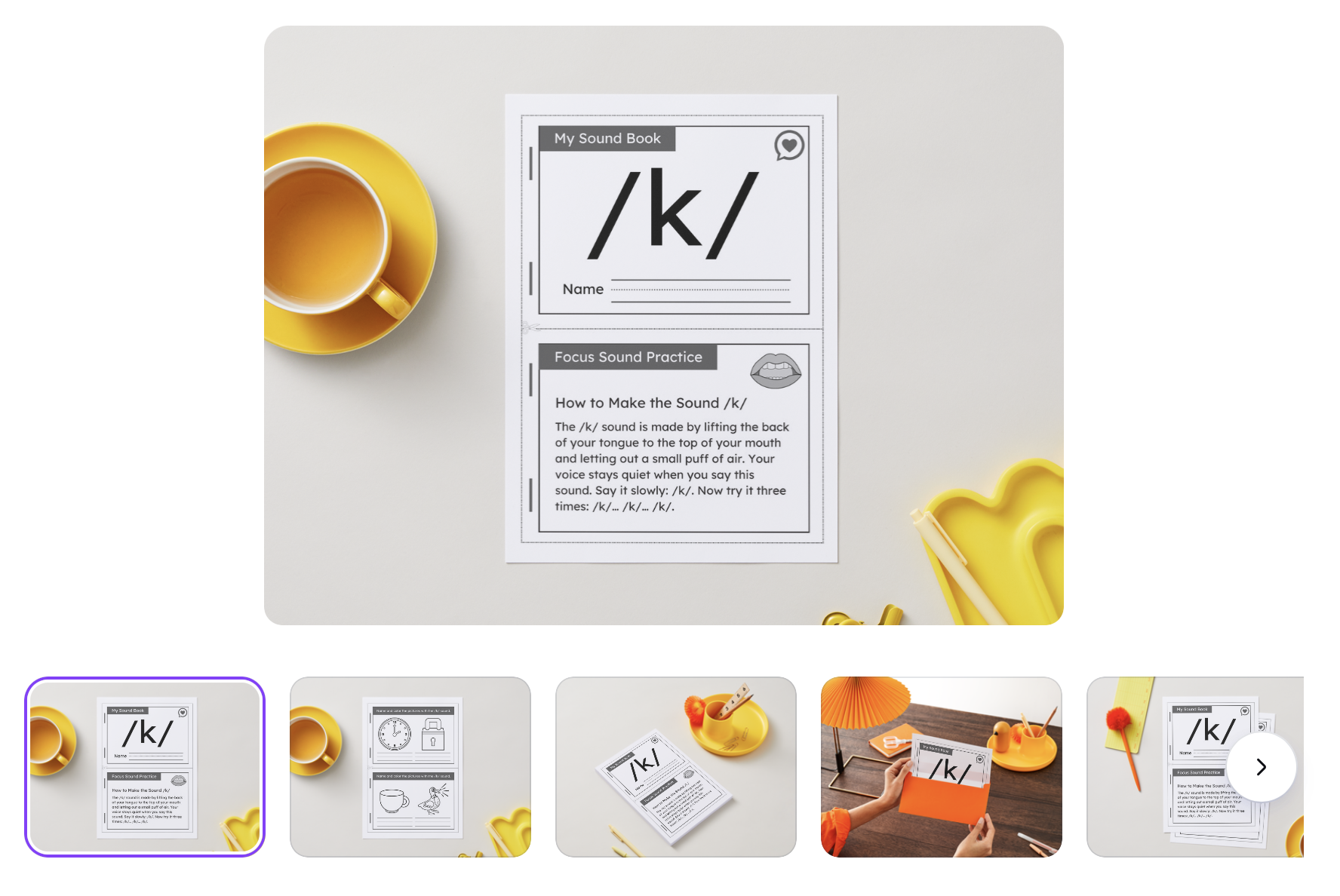
Extend learning with the printable mini activity book. Filled with engaging, hands-on activities, it gives children additional opportunities to review the /k/ sound through reading, colouring, matching, writing, and word practice. It is ideal for independent learning, literacy rotations, homework, or extra practice at home.
👉 Download the mini activity book here:
Tips for Educators
Model the /k/ sound clearly before introducing the spelling patterns.
Help children compare the spellings c, k, and ck.
Encourage children to listen for the /k/ sound in everyday words.
Provide opportunities to read and spell words with each pattern.
Keep lessons short, positive, and engaging.
Regularly review previously learned sounds and spelling patterns.
Frequently Asked Questions
What age is this lesson suitable for?
This lesson is designed for beginning readers, typically between 4 and 7 years old, but it can also support older students who are developing foundational reading skills.
Why does the /k/ sound have different spellings?
English uses several spelling patterns to represent the /k/ sound. Learning when to use c, k, and ck helps children become more confident readers and more accurate spellers over time.
Do I need to complete the lessons in order?
Yes. Each lesson builds on previously taught sounds and spelling patterns, allowing children to develop their decoding skills in a logical, systematic sequence.
Can I use these resources in my classroom?
Absolutely! These resources are designed for classroom teachers, reading intervention, tutors, homeschool educators, and families supporting beginning readers at home.
Continue Learning
Every new sound your child masters strengthens their reading foundation. Continue to the next lesson in the Developing Readers series as your child learns another essential phonics pattern through explicit, systematic instruction.
You may also enjoy exploring our growing collection of printable phonics resources, decodable activities, and early literacy materials designed to make learning to read simple, engaging, and effective.