Lesson 12: High-Frequency Word “a”
- Reading Bulilit
- Beginning Readers
What Will We Learn Today?
Today’s lesson introduces the high-frequency word “a”—a small but important word that shows up in almost every early reader’s sentence. In this lesson, your child will learn how to say, read, and understand the word “a”, and practice using it through phrases and connected sentences.
How to Say the Word “a”
The word “a” usually makes the sound /ə/. This is called the schwa sound—a quick, soft, and relaxed vowel sound. It’s the most common vowel sound in English.
Sometimes, “a” is pronounced as /eɪ/ when we want to emphasize that something is not specific.
Practice reading the word three times: a, a, a
Say it in a sentence:
I see a dog.
I want a nap.
Not the cat—a cat!
What Does the Word “a” Mean?
We use the word “a” when we are talking about one thing that is not specific. It usually comes before a noun—a person, place, animal, or object.
Examples:
a man
a map
a tin
a pan
It helps children build simple, complete sentences as they begin to read fluently.
Download the presentation here:
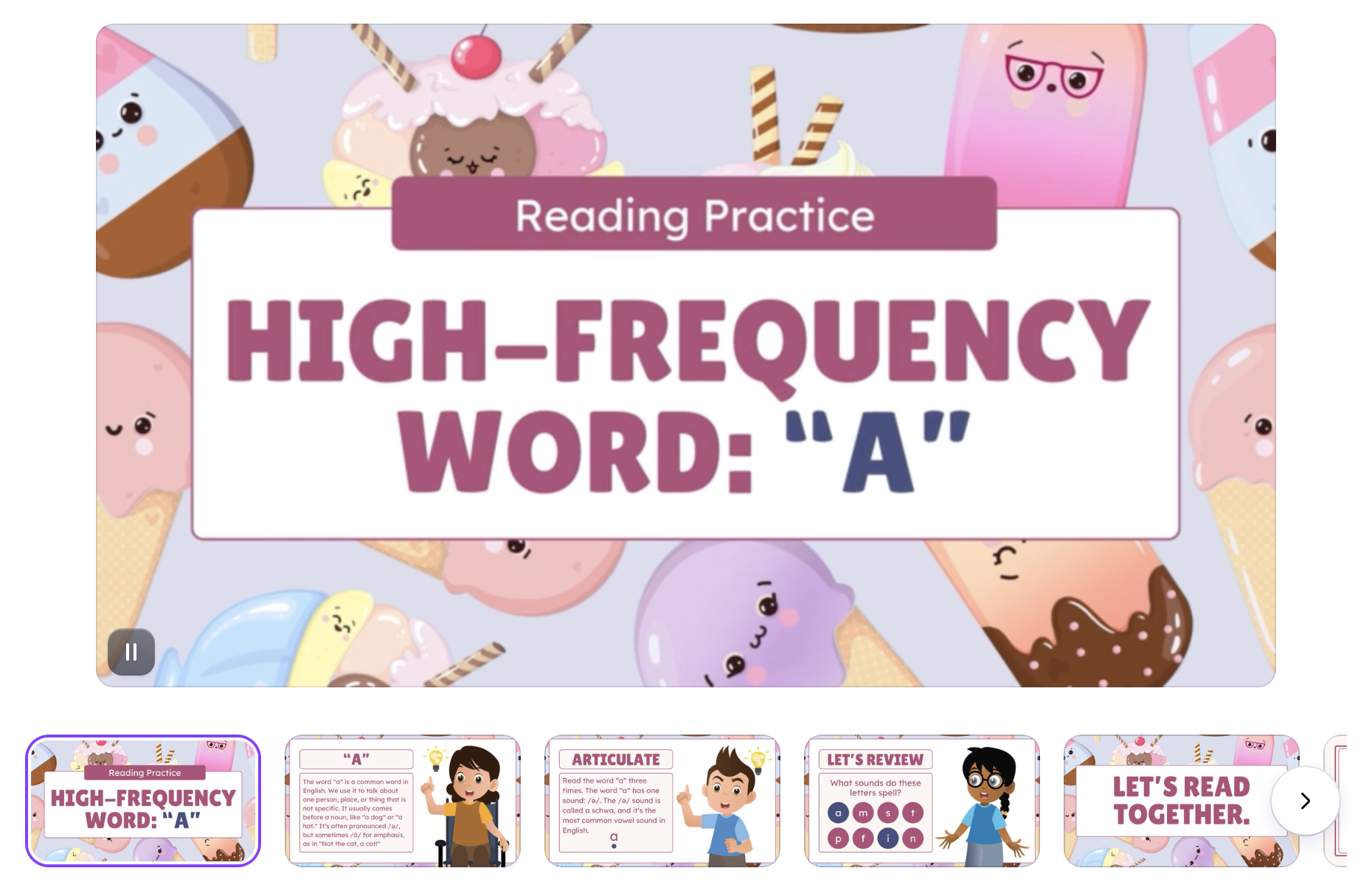
Fun and Meaningful Activities for the Word “a”
Read and Circle the Word
Write short phrases or sentences with the word “a” and ask your child to circle it.
Examples:
a mat
a fan
a pin
a man
Ask: “Can you find the word ‘a’? Let’s read it together.”
Build the Word with Letters
Since “a” is just one letter, focus on recognizing it as a word, not just a letter. Use magnetic letters, flashcards, or paper cutouts.
Say: “This is the letter A—but when we see it alone in a sentence, it’s also a word!”
Let’s Practice Reading Phrases
Practice blending known words with “a” to form short, natural phrases:
a man
a mat
a nap
a fan
a pin
a tan pan
Have your child point to each word and blend the phrase aloud.
Let’s Practice Reading Connected Sentences
Read these short decodable sentences together. Model reading first, then let your child try:
I tap a pin in a tin.
I fit a fin in the tin.
I tap the tin at the mat.
I sit and tap.
Ask: “Where do you see the word ‘a’? What comes after it?”
Let’s Practice Reading Sentences
Let your child try reading these on their own or with support:
I tap a map at the mat.
A fan and a pin fit in the pit.
I pin a map.
I nip a fin in the pan.
These sentences combine short vowel sounds, blending practice, and the word “a.”
Write It, Say It, Find It
Use a whiteboard or worksheet:
Write the word “a” three times
Say the word each time
Download the “a” Practice Worksheet Here:
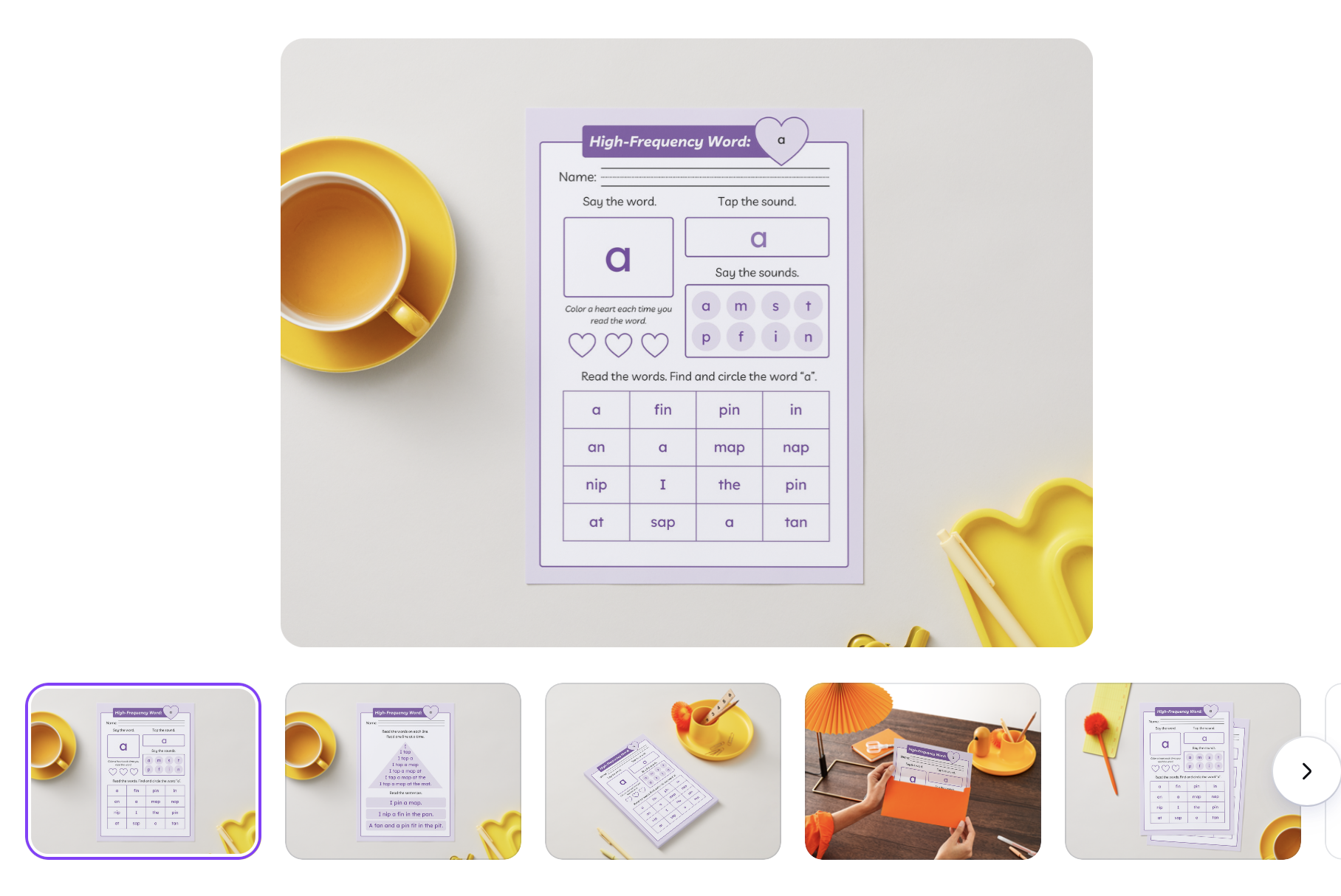
Conclusion
The word “a” may be small, but it’s one of the most important building blocks in early reading. By reading, blending, and using this word in context, your child will gain confidence and fluency.
Keep reviewing it in everyday sentences and reading time. What’s something your child can describe using “a”? Share it in the comments!