Lesson 18: High-Frequency Word “as”
- Reading Bulilit
- Beginning Readers
What Will We Learn Today?
In today’s lesson, your child will learn the high-frequency word “as”. This word appears often in conversations and books, especially when comparing or describing actions. Your child will learn to say, read, and understand the word “as”, and use it in early reading sentences.
How to Say the Word “as”
The word “as” has two sounds:
/ă/ as in cat
/z/ as in zoo
Blend the two sounds together to read the word: /ă/ + /z/ = as
Practice reading the word together: as
Say it slowly, then blend quickly: /ăz/
What Does the Word “as” Mean?
We use “as” to:
Compare things (Pat is as fast as Tom.)
Show how something happens (She smiled as she worked.)
It can appear before or after an action, description, or comparison.
Examples:
as I tap
as tan as a nut
as fun as Dad
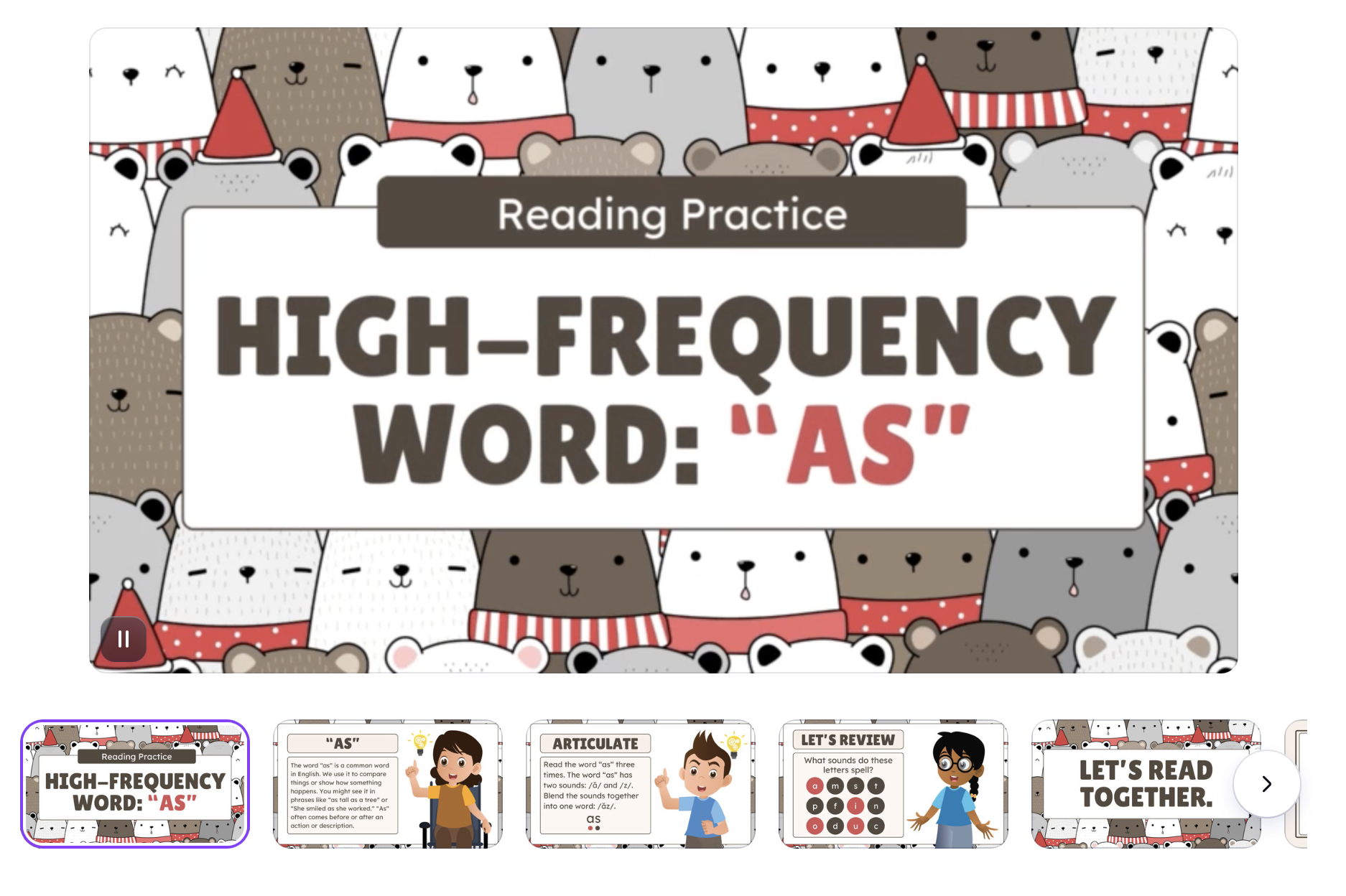
Download the presentation here:
Fun and Meaningful Activities for the Word “as”
Read and Circle the Word
Write short phrases or sentences that include “as” and ask your child to find and circle the word.
Examples:
Pat is as tan as a nut.
I tap as I sit.
Mom is as fun as Dad.
Ask: “Can you find the word ‘as’? Let’s read it in the sentence together.”
Build the Word with Letters
Help your child build as using magnetic letters, letter tiles, or paper cutouts.
Spell it out loud: a – s
Blend the sounds: /ăz/
Read the whole word: as
Let’s Practice Reading Phrases
Practice reading short phrases that include “as” and known CVC or sight words:
as fit as a cop
as I sip
as tan as a nut
as I sit
as fat as a cod
as I tap
Encourage your child to blend each phrase aloud slowly, then fluently.
Let’s Practice Reading Connected Sentences
These sentences combine comparison and simple structure for easy decoding:
Pat is a dog.
Tom is a cat.
Pat is as fit as Dad.
Tom is not as fit as Dad.
Pat is as fun as Tom.
Dad is not as fun as Tom.
Ask: “Who is being compared? What does the word ‘as’ help us understand?”
Let’s Practice Reading Sentences
I tap as I pat.
Mom is as fun as Dad.
Pat is as fit as a cop.
The mat is as tan as the map.
Encourage rereading to build fluency and confidence.
Write It, Say It, Find It
Use a whiteboard or worksheet:
Write the word “as” three times
Say the word each time
Spell the word aloud
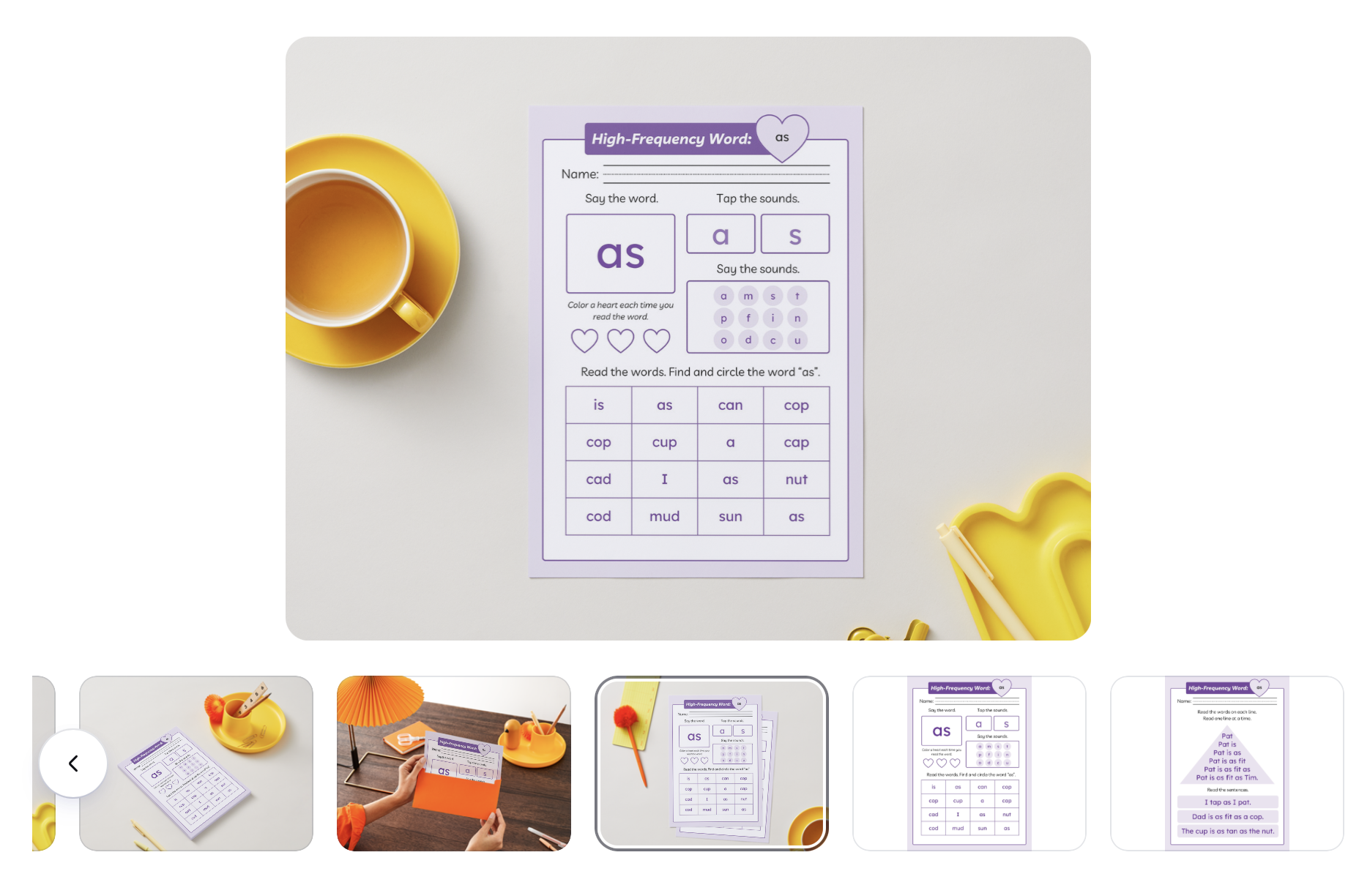
Download the “as” Practice Worksheet Here:
Conclusion
The word “as” may be short, but it helps readers make comparisons and explain how things happen. By blending sounds, reading phrases, and practicing full sentences, your child will learn to use “as” with meaning and fluency.
Make it fun and connected to daily conversations. What “as” sentence can your child say today? Share it in the comments!