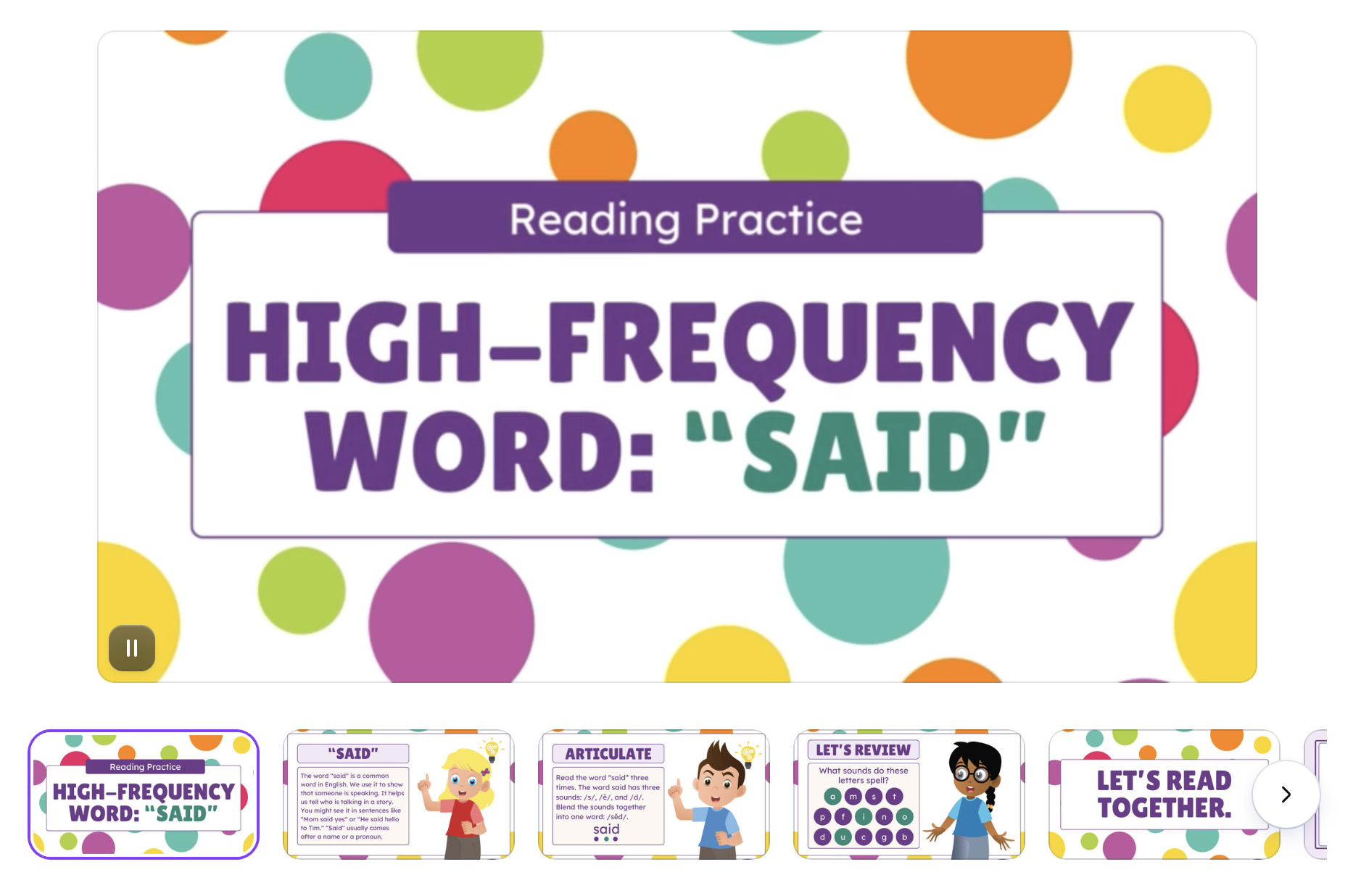
LESSON 21: High-frequency Word "said"
Help Your Child Learn to Read the High-Frequency Word “Said”!
What Will We Learn Today?
Today we’re learning the word “said”—a high-frequency word that shows up often in stories and conversations. In this lesson, your child will learn how to read the word “said”, recognize it in sentences, and understand how it helps tell who is speaking.
How to Read the Word “Said”
The word “said” has three sounds:
/s/ – like in sun
/ɛ/ – like in bed
/d/ – like in dog
Blend the sounds together: /sɛd/ → said
It doesn’t sound exactly how it looks, and that’s okay! “Said” is a tricky word we just need to learn by heart.
Let’s Play: Listen for “Said”
Tell your child:
“Let’s play a game. I’ll read some short texts. Clap when you hear the word ‘said.’ Ready?”
Mom said yes. ✅
Run fast.
Dad said no. ✅
Play time.
Sam said hi. ✅
Jump high.
This builds careful listening and word recognition.
What Does “Said” Mean?
We use “said” to show that someone is speaking.
It usually comes after a name or pronoun—like “Mom said” or “He said.”
Here are some examples:
“Mom said yes.”
“He said hello to Tim.”
“The dog said woof!”
Let’s Practice Reading Phrases
Have your child point to and read each phrase:
said the cop
said Mom
said the dog
said Dad
said Bob
said the man
Encourage rereading to build fluency and confidence.
Let’s Practice Reading Sentences
Tim said the cat is big.
Dan said, “I am sad.”
Dad said, “Tap the map.”
Gus said, “Let us nap.”
Try echo reading: you read it once, then your child repeats.
Let’s Practice Reading Connected Sentences
Connected sentences help children understand meaning across lines of text. Read together:
Gab got a big bug.
“The bug is in the bag,” said Gab.
“Is the bug big and tan?” said Mom.
“The bug is not big, but it is tan,” said Gab.
Ask your child:
Who is talking in each sentence?
What did Gab say?
What did Mom say?
Color, Trace, and Write
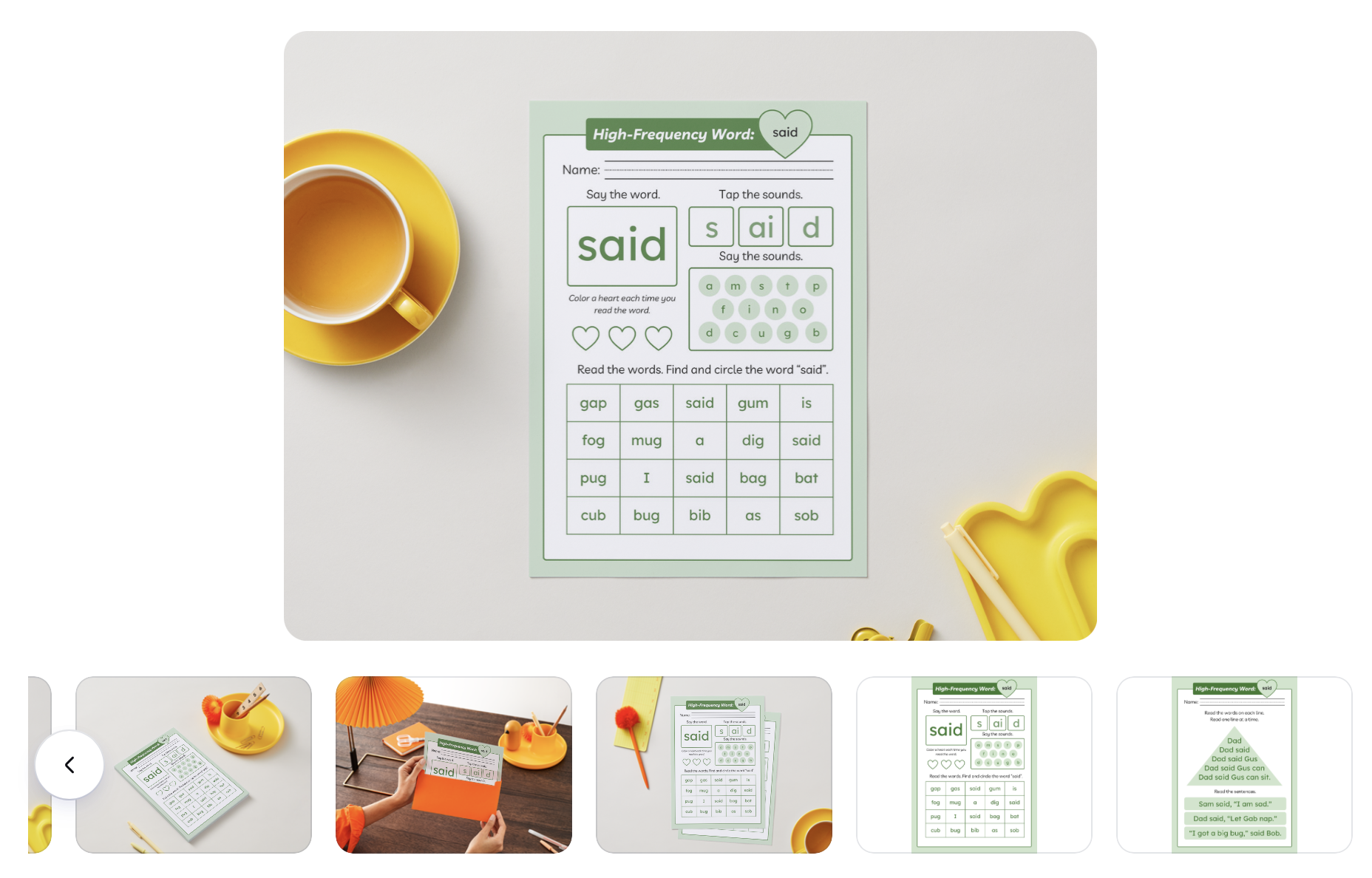
Use worksheets where your child can:
Read the word “said”
Trace the word
Write it on their own
Color pictures of people talking
[Download the “Said” Practice Worksheet Here]
Flashcards – High-Frequency Word Focus
Use simple word flashcards to help your child spot “said” quickly.
Include a picture of someone speaking and the word “said” underneath.
Play games like:
“Find the Word”
“Say and Point”
“Build the Word with Letter Cards”
[Download Flashcards for “Said” Here]
Conclusion
The word “said” is a small but mighty part of everyday reading. With practice, your child will begin to recognize it quickly and use it confidently in reading and writing.
Keep reading, keep exploring—and ask your child,
“Who said what in your favorite story?”Help Your Child Learn to Read the High-Frequency Word “Said”!
What Will We Learn Today?
Today we’re learning the word “said”—a high-frequency word that shows up often in stories and conversations. In this lesson, your child will learn how to read the word “said”, recognize it in sentences, and understand how it helps tell who is speaking.
How to Read the Word “Said”
The word “said” has three sounds:
/s/ – like in sun
/ɛ/ – like in bed
/d/ – like in dog
Blend the sounds together: /sɛd/ → said
It doesn’t sound exactly how it looks, and that’s okay! “Said” is a tricky word we just need to learn by heart.
Let’s Play: Listen for “Said”
Tell your child:
“Let’s play a game. I’ll read some short texts. Clap when you hear the word ‘said.’ Ready?”
Mom said yes. ✅
Run fast.
Dad said no. ✅
Play time.
Sam said hi. ✅
Jump high.
This builds careful listening and word recognition.
What Does “Said” Mean?
We use “said” to show that someone is speaking.
It usually comes after a name or pronoun—like “Mom said” or “He said.”
Here are some examples:
“Mom said yes.”
“He said hello to Tim.”
“The dog said woof!”
Let’s Practice Reading Phrases
Have your child point to and read each phrase:
said the cop
said Mom
said the dog
said Dad
said Bob
said the man
Encourage rereading to build fluency and confidence.
Let’s Practice Reading Sentences
Tim said the cat is big.
Dan said, “I am sad.”
Dad said, “Tap the map.”
Gus said, “Let us nap.”
Try echo reading: you read it once, then your child repeats.
Let’s Practice Reading Connected Sentences
Connected sentences help children understand meaning across lines of text. Read together:
Gab got a big bug.
“The bug is in the bag,” said Gab.
“Is the bug big and tan?” said Mom.
“The bug is not big, but it is tan,” said Gab.
Ask your child:
Who is talking in each sentence?
What did Gab say?
What did Mom say?
Color, Trace, and Write
Use worksheets where your child can:
Read the word “said”
Trace the word
Write it on their own
Color pictures of people talking
[Download the “Said” Practice Worksheet Here]
Flashcards – High-Frequency Word Focus
Use simple word flashcards to help your child spot “said” quickly.
Include a picture of someone speaking and the word “said” underneath.
Play games like:
“Find the Word”
“Say and Point”
“Build the Word with Letter Cards”
[Download Flashcards for “Said” Here]
Conclusion
The word “said” is a small but mighty part of everyday reading. With practice, your child will begin to recognize it quickly and use it confidently in reading and writing.
Keep reading, keep exploring—and ask your child,
“Who said what in your favorite story?”