Lesson 30: High-Frequency Word “of”
- Reading Bulilit
- Beginning Readers
What Will We Learn Today?
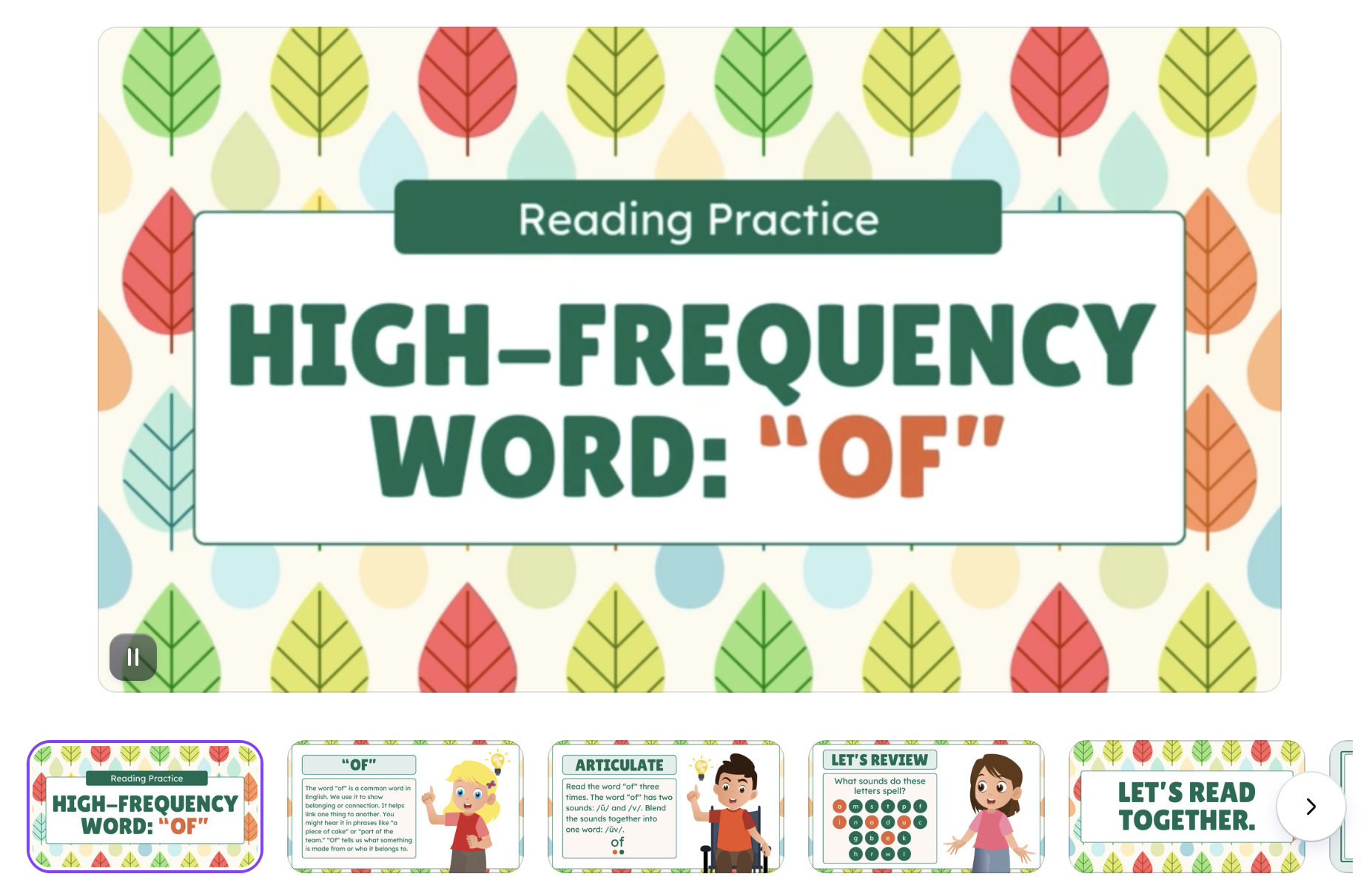
Today we’re learning the word “of”—a high-frequency word that connects ideas and shows belonging. In this lesson, your child will learn how to read the word “of”, understand its meaning, and use it in simple phrases and connected sentences.
How to Read the Word “Of”
The word “of” has two sounds:
/ŭ/ – like the “u” in cup
/v/ – like the “v” in van
Blend them together: /ŭ/ + /v/ = /ŭv/ → of
It’s a tricky word because it doesn’t follow regular spelling rules, so we teach it through repetition and usage in context.
What Does “Of” Mean?
We use “of” to show:
Belonging: “a piece of cake”
Connection: “part of the team”
Contents: “a bag of mats”
Made from: “a cup of mud”
It helps link one thing to another.
Download the presentation here:
Let’s Practice Reading Phrases
Read and point to each phrase:
top of the log
a bag of mats
cup of mud
a can of ham
a lot of cats
a bin of bibs
Let’s Practice Reading Sentences
Get the can of ham.
A lot of ham is in the pan.
The cup of mud is hot.
Gus is on top of the log.
Highlight the word “of” in each sentence. Say it together with your child.
Let’s Practice Reading Connected Sentences
Pam had a bag of ham.
The bag of ham is big.
I said, “Do not drop it!”
Pam ran to the mat.
The bag of ham slid.
The ham is on the rug.
Ask:
What was in the bag?
What happened to the ham?
Where did Pam run?
Find, Trace, and Write
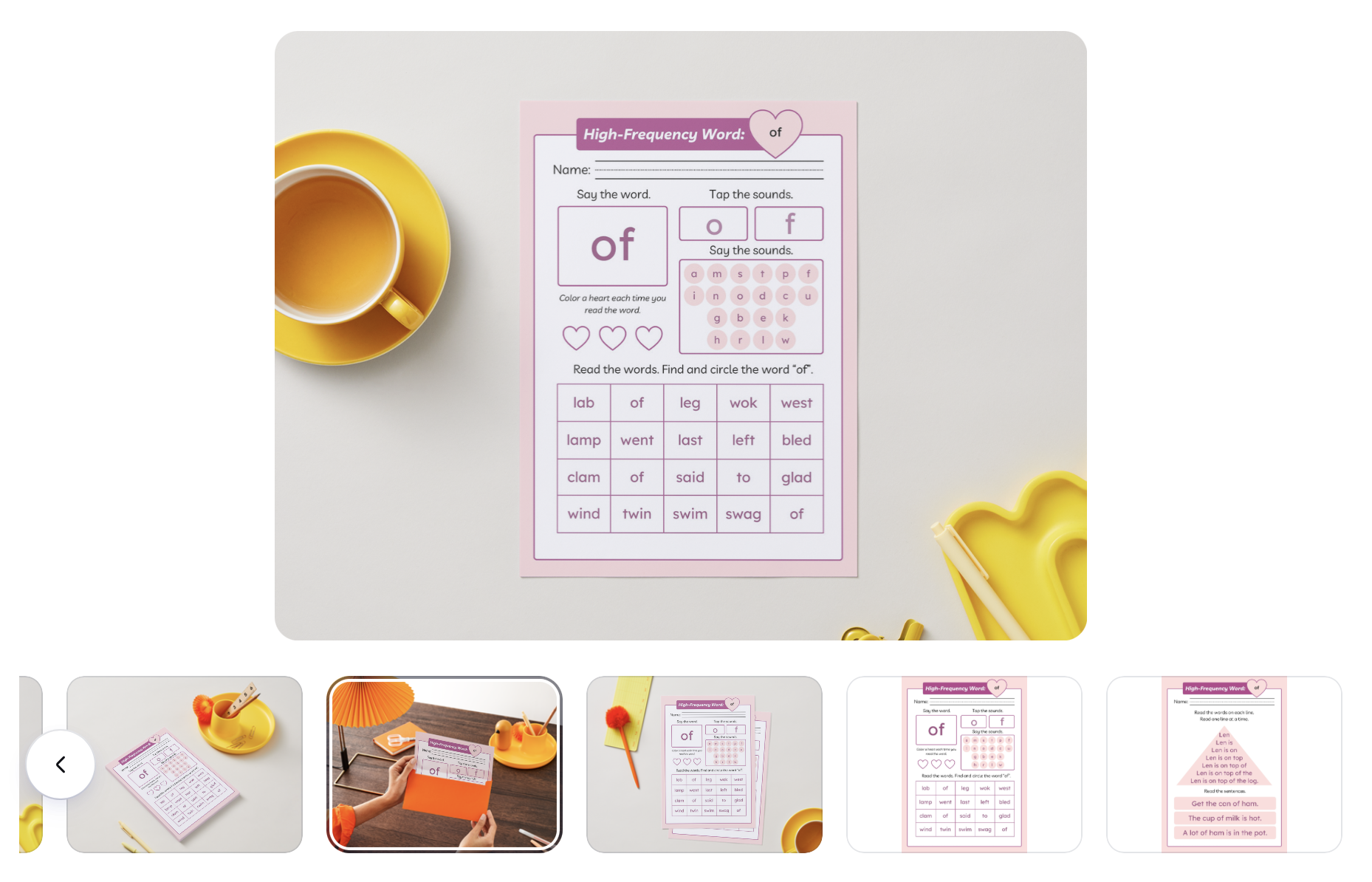
Use printable worksheets where your child can:
Read and trace the word “of”
Write the word independently
Download the “Of” Practice Worksheet Here:
Conclusion
The word “of” may be small, but it’s full of meaning. With simple practice in phrases, sentences, and stories, your child will become confident in reading and using “of” to link ideas.