Lesson 36: High-Frequency Word “was”
- Reading Bulilit
- Beginning Readers
What Will We Learn Today?
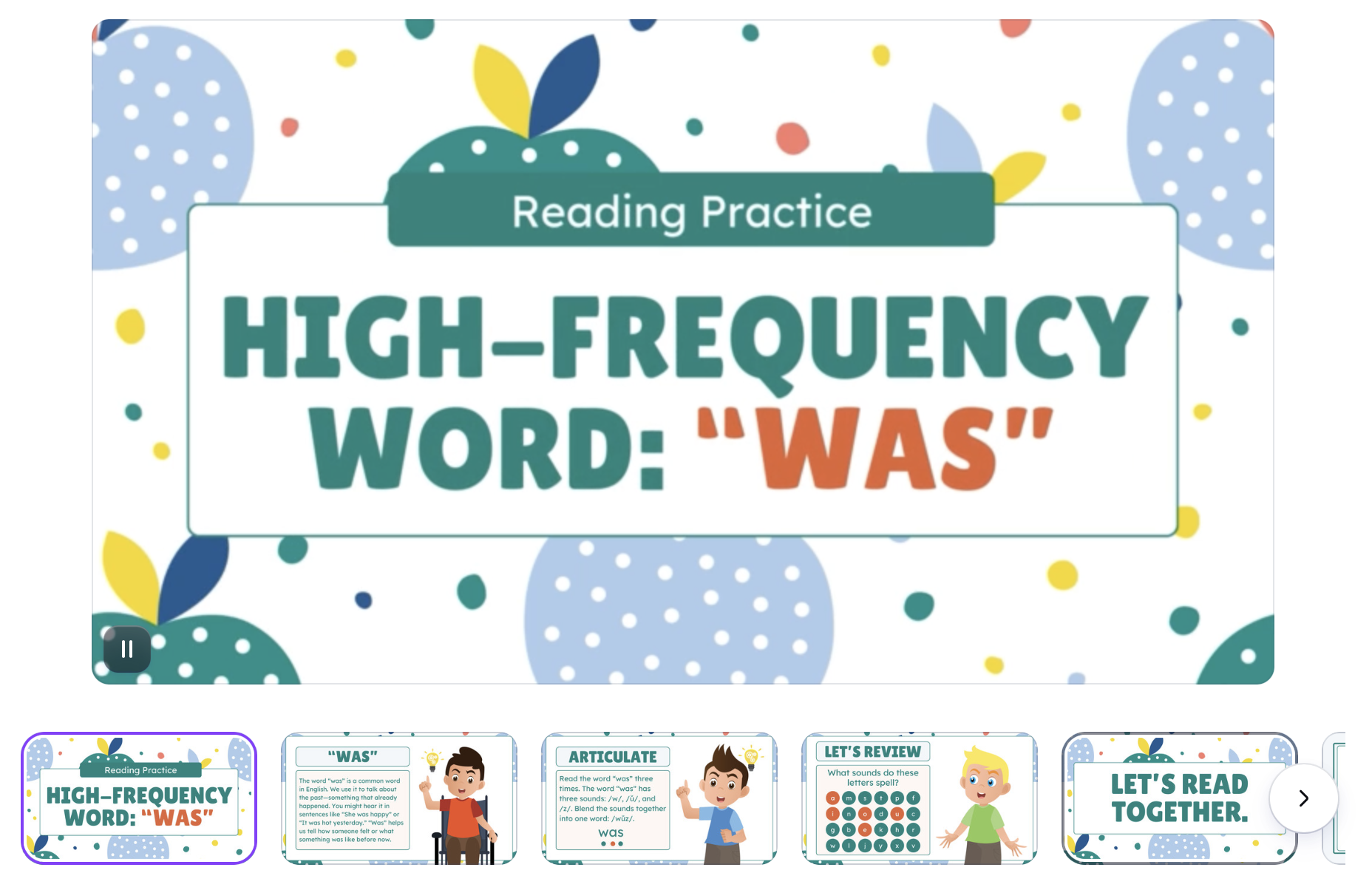
Today we’re learning the word “was”—a high-frequency word used to talk about the past. In this lesson, your child will learn how to read the word “was”, understand what it means, and use it in phrases and connected sentences.
How to Read the Word “Was”
The word “was” has three sounds:
/w/ – like in wet
/ŭ/ – like the “u” in cup
/z/ – like in zoo
Blend the sounds together: /w/ – /ŭ/ – /z/ → was
What Does “Was” Mean?
We use “was” to talk about:
The past — something that already happened
Feelings — “She was tired.”
Descriptions — “The log was hot.”
“Was” helps us describe what something used to be or how someone used to feel.
Download the presentation here:
Let’s Practice Reading Phrases
was the cat
was on top
was on tip
was the dog
was not a rat
was on a mat
Try reading each phrase slowly, then smoothly.
Let’s Practice Reading Sentences
The bag was wet.
The pup was sad.
The log was hot.
I said the cup was big.
Encourage your child to find the word “was” in each sentence and read with expression.
Let’s Practice Reading Connected Sentences
The dog was on the mat.
The mat was wet.
The dog was sad.
Max got a rug.
The dog was glad.
Ask your child:
Why was the dog sad?
What happened next?
How did the dog feel at the end?
Make Your Own “Was” Phrases and Sentences
Invite your child to try three of their own:
Phrases:
was very big
was at school
was not glad
Sentences:
The cake was sweet.
Dad was at the shop.
It was not fun.
This builds comprehension and confidence.
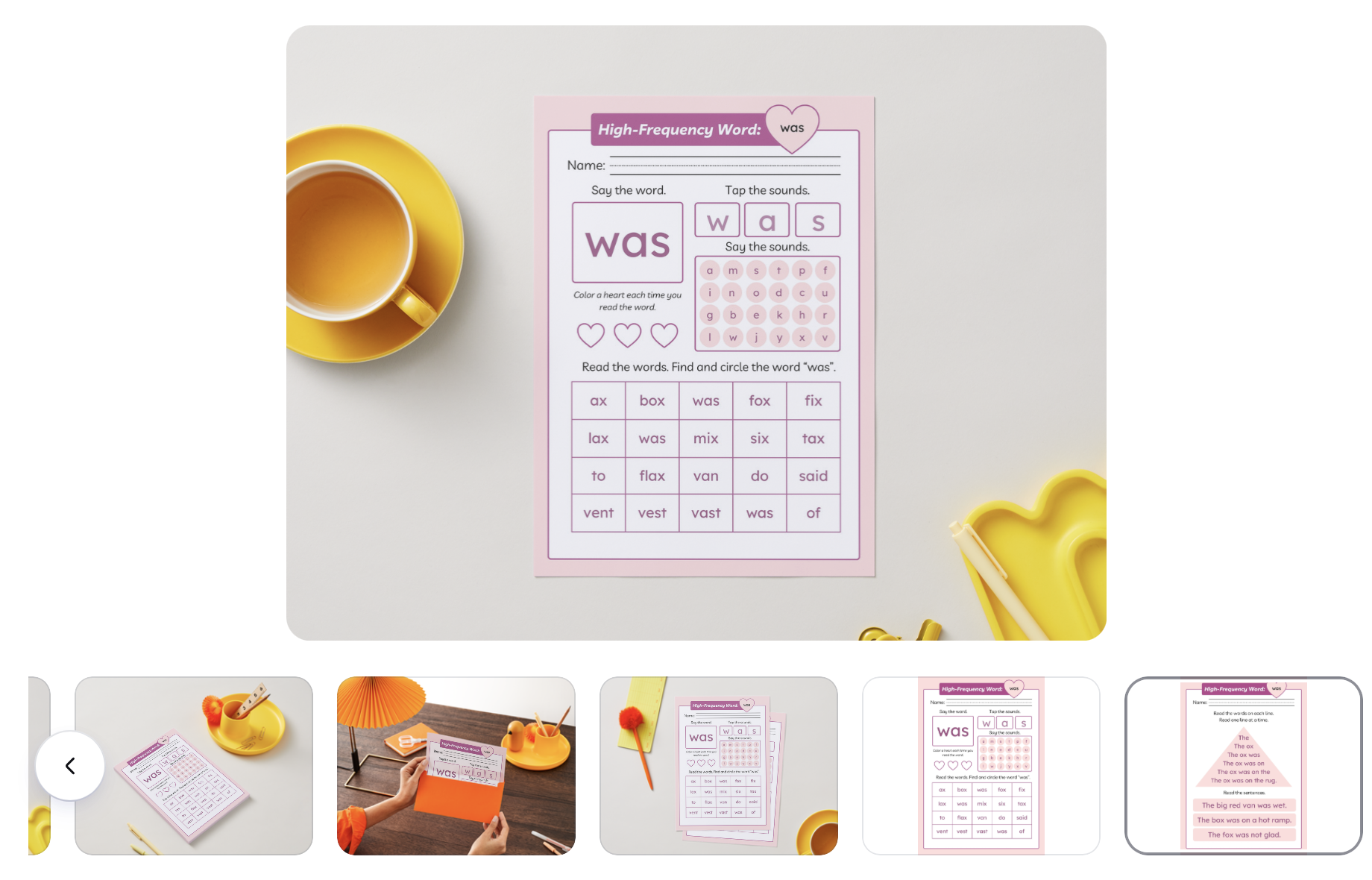
Find, Trace, and Write
Use worksheets where your child can:
Read and trace the word “was”
Write it on their own
Download the “Was” Practice Worksheet Here:
Conclusion
The word “was” helps children describe the past and builds early grammar skills. With repeated reading, tracing, and use in context, your child will quickly become comfortable with this important word.